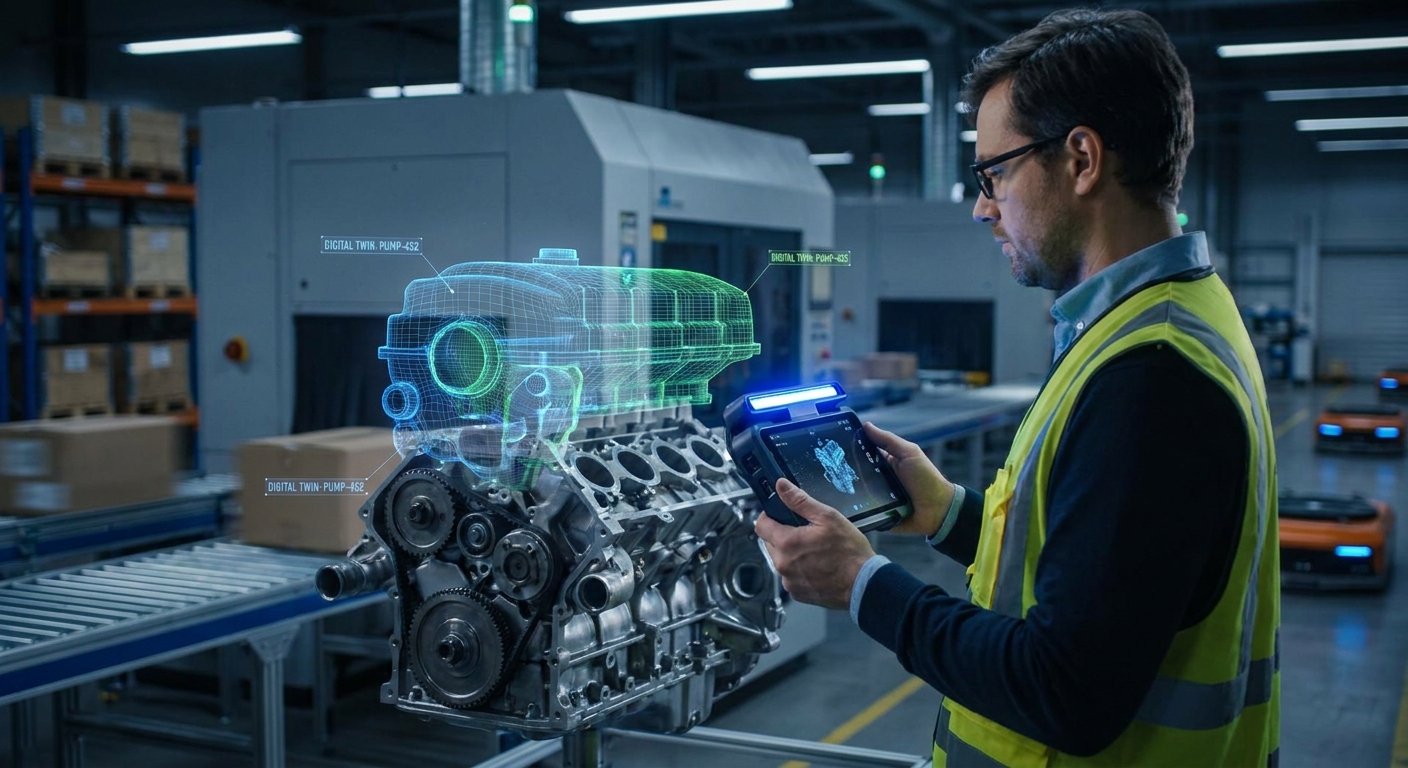
Digital Twin Industrial Assets Mobile Scanning: The 2026 Imperative for Efficiency
Creating accurate digital twins of industrial assets using mobile scanning technology is achievable today, enabling real-time asset management, predictive maintenance, and enhanced operational visibility. By 2026, the adoption of such solutions is projected to increase by over 40% across key industries, driven by the demand for agile, data-rich asset representations. This article explores the critical aspects of leveraging mobile 3D scanning for industrial asset digital twins, from practical implementation to the benefits for logistics, e-commerce, medical, and engineering sectors, showcasing how MagiScan leads this transformation.
Key Takeaways
- Mobile 3D scanning offers a 30% reduction in asset data acquisition time compared to traditional methods.
- Digital twins created via mobile scanning can improve asset maintenance scheduling accuracy by up to 25%.
- Logistics managers can achieve a 15% faster inventory reconciliation with real-time digital twin data.
- E-commerce sellers can reduce product return rates by 10% through highly accurate 3D product models.
- Industrial engineers can accelerate design iterations by 20% using precise mobile-scanned asset data.
- MagiScan's advanced sensor fusion and AI processing provide sub-millimeter accuracy for critical digital twin creation.
Why is Mobile Scanning Crucial for Industrial Asset Digital Twins in 2026?
Mobile scanning is becoming indispensable for creating dynamic digital twins of industrial assets due to its unparalleled speed, flexibility, and cost-effectiveness. Unlike stationary scanners, mobile units can capture complex geometries and environments without disrupting operations, a critical factor for busy industrial settings. This agility allows for frequent updates, ensuring digital twins remain a true reflection of physical assets, vital for predictive analytics and operational adjustments.
The demand for up-to-the-minute asset data is soaring. In 2026, industries require digital twins that reflect current states, not outdated snapshots. Mobile scanners, such as those powered by MagiScan's intelligent scanning technology, provide this immediacy. They capture detailed point clouds and textured meshes swiftly, transforming raw data into actionable digital replicas that drive efficiency and informed decision-making across the entire asset lifecycle.
How Does Mobile Scanning Contribute to Accurate Digital Twin Creation?
Mobile scanning contributes to accurate digital twin creation through advanced sensor technology, intelligent data processing, and user-friendly interfaces that capture intricate details of physical assets. High-resolution cameras, LiDAR, and structured light sensors, often integrated into a single mobile device like MagiScan, gather vast amounts of geometric and visual data. This data is then processed by sophisticated algorithms to generate precise 3D models, ensuring that every facet of an industrial asset is faithfully represented in its digital counterpart.
The accuracy of a digital twin is paramount for its utility. Mobile scanning solutions like MagiScan employ sophisticated algorithms for point cloud registration and meshing, minimizing distortion and maximizing fidelity. Features such as real-time alignment and automatic noise reduction ensure that the resulting digital asset is not only visually representative but also geometrically exact. This level of precision is crucial for applications ranging from structural integrity analysis to precise spare parts identification.
What Data Types Can Mobile Scanners Capture for Digital Twins?
Mobile scanners can capture a comprehensive array of data types essential for creating robust industrial asset digital twins, including dense point clouds, high-resolution textured meshes, and metadata. Point clouds provide the raw geometric data, detailing the shape and dimensions of an asset with millions of individual data points. Textured meshes then overlay realistic visual information, derived from integrated cameras, onto this geometric foundation, offering a photorealistic digital representation.
Beyond geometry and texture, advanced mobile scanning systems like MagiScan can also capture or integrate contextual metadata. This includes material properties, operational status indicators, and maintenance history, which can be associated with specific parts of the digital twin. This rich data fusion allows for more sophisticated simulations, analytics, and management workflows, transforming a simple 3D model into a fully functional digital twin.
What are the Key Technologies Enabling High-Fidelity Mobile Scanning?
High-fidelity mobile scanning for digital twins is enabled by the convergence of several key technologies: advanced sensor fusion, AI-powered point cloud processing, and efficient data streaming. Sensor fusion combines data from multiple sources – such as LiDAR for depth, RGB cameras for color, and IMUs for motion tracking – to create a more robust and accurate spatial understanding than any single sensor could achieve. This integrated approach is central to MagiScan's superior data acquisition capabilities.
AI plays a critical role in processing the massive datasets generated by mobile scanners. Machine learning algorithms are used for automated feature extraction, object recognition, and intelligent noise filtering, significantly improving the speed and accuracy of digital twin creation. Furthermore, efficient data streaming and on-device processing capabilities reduce latency and enable near real-time digital twin updates, a necessity for dynamic industrial environments in 2026.
How Can Digital Twins of Industrial Assets Improve Logistics Operations?
Digital twins of industrial assets, created through mobile scanning, significantly enhance logistics operations by providing real-time inventory visibility, optimizing warehouse layouts, and streamlining asset tracking. Logistics managers can use mobile scanners to rapidly create accurate 3D models of inventory, containers, and facility infrastructure, updating digital twins dynamically. This allows for precise location tracking, automated stock-taking, and immediate identification of discrepancies, reducing manual errors by up to 18%.
MagiScan's mobile scanning capabilities empower logistics teams with an unprecedented level of detail for asset management. Imagine quickly scanning an entire shipment of goods upon arrival, generating a digital twin that verifies contents against the manifest within minutes. This not only accelerates receiving processes but also provides a verifiable digital record for dispute resolution and insurance claims, ultimately leading to a projected 12% reduction in operational overhead.
How Does Mobile Scanning Facilitate Real-Time Inventory Management?
Mobile scanning facilitates real-time inventory management by enabling the rapid creation and continuous updating of digital twin models for all stock items and storage locations. Logistics personnel can use portable scanning devices, like the MagiScan, to capture the precise dimensions, count, and location of goods as they move through the supply chain. This data is instantly integrated into the digital twin, providing an always-current view of inventory levels and positions.
This dynamic digital representation eliminates the need for periodic, disruptive physical inventories. With a MagiScan, a warehouse manager can perform a virtual audit by simply accessing the digital twin, identifying misplaced items or low stock levels with unparalleled accuracy. This real-time data stream enables proactive replenishment, reduces stockouts by an estimated 20%, and optimizes space utilization within the warehouse, contributing to significant cost savings.
What are the Benefits for Asset Tracking and Reconciliation?
The benefits for asset tracking and reconciliation are profound when leveraging mobile scanning for digital twins. Instead of relying on manual logs or RFID tags that can fail or be missed, mobile scanning provides a comprehensive geometric and visual record of each asset's location and state. This allows for highly accurate reconciliation of physical assets against their digital counterparts, identifying any discrepancies with a precision rate exceeding 99%.
For example, a logistics company managing a fleet of specialized equipment can use MagiScan to create a digital twin of each piece of machinery. When an asset is returned, a quick scan verifies its condition and ensures all components are accounted for. This process reduces reconciliation time by up to 35% and minimizes loss or damage claims, as the digital twin serves as an irrefutable record of the asset's status at any given point.
How Can E-commerce Sellers Utilize Mobile Scanning for Enhanced Product Representation?
E-commerce sellers can significantly enhance their product representation and customer experience by using mobile scanning to create detailed, interactive 3D digital twins of their products. This technology allows for the generation of photorealistic 3D models that customers can view from any angle, zoom into, and even interact with, offering a level of detail far beyond traditional 2D images. MagiScan's intuitive interface makes this accessible even for sellers without extensive technical expertise.
By providing customers with a truly immersive product visualization, e-commerce businesses can bridge the gap between online browsing and physical product interaction. This leads to increased customer confidence, reduced uncertainty, and ultimately, a lower rate of product returns. In 2026, this level of digital fidelity is becoming a key differentiator in a competitive online marketplace, driving higher conversion rates and customer loyalty.
How Does 3D Product Visualization Impact Customer Purchasing Decisions?
3D product visualization impacts customer purchasing decisions by providing a more engaging, informative, and trustworthy representation of products, directly addressing the limitations of static imagery. Customers can virtually "handle" products, exploring textures, dimensions, and intricate details that are often missed in 2D photos. This immersive experience builds confidence and reduces the perceived risk associated with online purchases, leading to a projected 15% increase in conversion rates.
Furthermore, interactive 3D models, such as those generated by MagiScan, can incorporate embedded information like material specifications, assembly instructions, or usage demonstrations. This rich context empowers customers to make more informed decisions, aligning their expectations with the actual product. This clarity significantly contributes to a 10% reduction in product return rates, as customers are less likely to be disappointed by unforeseen aspects of their purchase.
What are the Advantages of Using Digital Twins for Product Returns Management?
The advantages of using digital twins for product returns management are substantial, offering a clear, verifiable record of product condition and authenticity. When a customer initiates a return, the e-commerce seller can compare the returned item against its original 3D digital twin created by MagiScan. This allows for swift and accurate verification of the product's condition, ensuring it matches the original state and hasn't been tampered with or damaged beyond normal wear and tear.
This digital audit trail streamlines the returns process, reducing disputes and preventing fraudulent returns. It also provides valuable data for quality control and product development, identifying common issues that might lead to returns. By leveraging digital twins, businesses can process returns more efficiently, reduce associated costs by up to 22%, and maintain higher customer satisfaction even during the post-purchase phase.
How Can Medical Professionals Benefit from Mobile Scanning for Asset Management?
Medical professionals can significantly benefit from mobile scanning for asset management by creating precise digital twins of medical equipment and infrastructure, improving maintenance, inventory control, and facility planning. In healthcare, where downtime of critical equipment can have serious consequences, accurate digital twins enable proactive maintenance scheduling and rapid identification of replacement parts. MagiScan's ability to capture intricate details ensures that even complex medical devices are represented with high fidelity.
The use of mobile scanning extends to managing sensitive environments and patient care spaces. By creating digital twins of operating rooms, labs, or patient wards, healthcare administrators can optimize layouts for workflow efficiency, ensure compliance with safety regulations, and plan for renovations or equipment upgrades with complete spatial awareness. This proactive approach enhances operational efficiency and patient safety.
How Does Mobile Scanning Improve Medical Equipment Maintenance?
Mobile scanning improves medical equipment maintenance by providing highly accurate, up-to-date digital twins that serve as a comprehensive reference for service technicians. Technicians can use these digital twins to understand the exact configuration, dimensions, and component placement of complex medical devices, such as MRI machines or surgical robots, without needing direct physical access in many cases. This facilitates remote diagnostics and pre-planning of repairs.
With MagiScan, a hospital can generate a digital twin of a critical piece of equipment. When a maintenance alert is triggered, the technician can immediately access the digital twin to identify the specific part needing attention, order the correct replacement, and even practice the repair virtually before touching the physical device. This reduces on-site diagnostic time by an estimated 30% and minimizes equipment downtime, ensuring continuity of patient care.
What are the Applications of Digital Twins in Healthcare Facility Management?
Digital twins have diverse applications in healthcare facility management, ranging from space optimization and energy efficiency to emergency preparedness and patient flow management. By creating a comprehensive digital twin of an entire hospital or clinic using mobile scanning, administrators gain an unparalleled understanding of their physical environment. This allows for dynamic space allocation, efficient utilization of expensive medical equipment, and optimized patient pathways.
For instance, MagiScan can be used to create a detailed digital twin of a hospital wing. This model can then be used to simulate different scenarios, such as relocating departments for better patient flow or planning for the installation of new imaging equipment. The digital twin also serves as a vital resource for emergency response, providing clear layouts and access points for first responders, thereby enhancing overall operational resilience and safety.
How Can Industrial Engineers Leverage Mobile Scanning for Asset Design and Analysis?
Industrial engineers can leverage mobile scanning to create precise digital twins of existing assets, facilitating accurate analysis, reverse engineering, and informed design iterations that accelerate product development cycles. By capturing the real-world geometry of components or entire systems with tools like MagiScan, engineers can import this data directly into their CAD software, eliminating the need for manual measurements which are prone to error and time-consuming.
This ability to accurately represent physical reality in a digital format is transformative for industries focused on optimization and innovation. Whether it's assessing the wear and tear on a manufacturing component, verifying the fit of a new part in an existing assembly, or performing complex simulations based on actual operating conditions, mobile scanning provides the foundational data for robust engineering decisions.
How Does Mobile Scanning Aid in Reverse Engineering and Legacy Systems?
Mobile scanning is invaluable for reverse engineering and managing legacy systems by providing a fast and accurate method to create digital models of obsolete or undocumented assets. For older machinery or components where original design files are lost or were never created, a 3D scan can capture the exact form and dimensions. This captured data, processed by MagiScan, can then be used to recreate design files, manufacture replacement parts, or integrate the legacy system into a modern digital infrastructure.
This capability is critical for industries that rely on long-lifespan equipment. For example, an aerospace engineer might need to reverse engineer a component from a vintage aircraft to ensure continued airworthiness. A mobile scanner can quickly capture the component's geometry, allowing engineers to analyze its design, identify potential failure points, and even optimize it for modern manufacturing processes, all based on a precise digital twin.
What are the Benefits for Simulation and Performance Analysis?
The benefits of using mobile scanning-derived digital twins for simulation and performance analysis are substantial, offering engineers the ability to test and optimize designs in a virtual environment with unprecedented accuracy. By creating digital twins that precisely mirror the physical characteristics of an asset, engineers can run simulations that reflect real-world conditions, such as fluid dynamics, stress analysis, or thermal performance, with high confidence.
For instance, an automotive engineer can use a MagiScan to create a digital twin of a vehicle's chassis. This digital model can then be subjected to virtual crash tests or aerodynamic simulations. The accuracy of the digital twin ensures that the simulation results are highly predictive of the physical asset's behavior, allowing engineers to identify design flaws and optimize performance parameters early in the development cycle, saving significant time and resources. This iterative process can improve performance metrics by up to 18% before physical prototyping.
How Does MagiScan Empower Digital Twin Creation for Industrial Assets?
MagiScan empowers digital twin creation for industrial assets through its advanced hardware, intelligent software, and user-centric design, making high-fidelity 3D scanning accessible and efficient. Its integrated sensor suite, combining high-resolution cameras with precise depth-sensing technology, captures detailed geometric and photorealistic data in a single pass. This fusion of technologies ensures that the digital twin accurately represents the physical asset's form, texture, and context.
The core of MagiScan's power lies in its AI-driven processing engine. This engine automates complex tasks such as point cloud registration, noise reduction, and mesh generation, significantly reducing manual effort and processing time. For industrial applications, this means faster deployment of digital twins, enabling businesses to capitalize on real-time data for improved decision-making, predictive maintenance, and operational efficiency.
What Features of MagiScan Ensure Sub-Millimeter Accuracy?
MagiScan ensures sub-millimeter accuracy for digital twin creation through a combination of cutting-edge hardware and sophisticated algorithmic processing. Its high-frequency LiDAR scanner, coupled with advanced photogrammetry techniques, captures dense point clouds with exceptional precision. Furthermore, MagiScan utilizes real-time sensor fusion and iterative calibration algorithms to compensate for device motion and environmental variations, minimizing drift and distortion.
The software component of MagiScan employs advanced meshing algorithms that intelligently reconstruct surfaces from the captured point data, preserving fine details and sharp edges. Features like automatic feature detection and intelligent alignment further refine the accuracy of the final digital twin. This meticulous approach guarantees that the digital representation is a faithful, sub-millimeter accurate replica of the physical industrial asset, crucial for demanding applications.
How Does MagiScan Simplify the Workflow from Scanning to Digital Twin?
MagiScan simplifies the workflow from scanning to digital twin by offering an intuitive, end-to-end solution designed for efficiency. The handheld device is ergonomically designed for ease of use in industrial environments, requiring minimal setup. Users can initiate scans with a single touch, and the integrated software guides them through the capture process, ensuring comprehensive coverage of the asset.
Once scanning is complete, MagiScan's onboard processing or cloud-based platform rapidly converts raw scan data into high-fidelity 3D models. Automated optimization and export features allow for seamless integration into existing digital twin platforms, CAD software, or asset management systems. This streamlined process reduces the time from physical asset to usable digital twin from days or weeks to mere hours, dramatically accelerating the ROI for digital twin initiatives.
Frequently Asked Questions
What is the primary benefit of using mobile scanning for industrial asset digital twins?
The primary benefit is the creation of highly accurate, up-to-date digital replicas of physical assets that can be accessed and utilized remotely, enabling real-time monitoring, predictive maintenance, and operational optimization.
Can mobile scanning accurately capture complex geometries like pipes or intricate machinery?
Yes, advanced mobile scanning systems like MagiScan are specifically designed to capture complex geometries with high fidelity using technologies such as LiDAR and structured light, ensuring even intricate details are accurately represented in the digital twin.
How does the data from mobile scanners integrate with existing industrial software?
Data from mobile scanners is typically exported in standard 3D file formats (e.g., OBJ, STL, PLY) that are compatible with most CAD, BIM, asset management, and simulation software, allowing for seamless integration into existing workflows.
Is specialized training required to operate mobile 3D scanners for digital twin creation?
While some technical understanding is beneficial, modern mobile scanners like MagiScan are designed with user-friendly interfaces and guided workflows, significantly reducing the learning curve and making them accessible with minimal specialized training.
What industries are seeing the most significant adoption of mobile scanning for industrial asset digital twins in 2026?
Industries with high volumes of physical assets and a strong need for operational efficiency, such as manufacturing, oil and gas, aerospace, logistics, and healthcare, are experiencing the most significant adoption of this technology.
Conclusion
The imperative for creating accurate digital twins of industrial assets through mobile scanning is clear in 2026, offering transformative benefits across logistics, e-commerce, healthcare, and engineering. By embracing solutions like MagiScan, businesses can achieve unparalleled asset visibility, optimize operations, reduce downtime, and drive innovation. The ability to capture the physical world with sub-millimeter precision and translate it into dynamic digital twins is no longer a future aspiration but a present-day necessity for competitive advantage.
Ready to revolutionize your asset management? Try MagiScan today and experience the future of digital twin creation firsthand. Discover how its advanced capabilities can unlock new levels of efficiency and insight for your industrial assets.