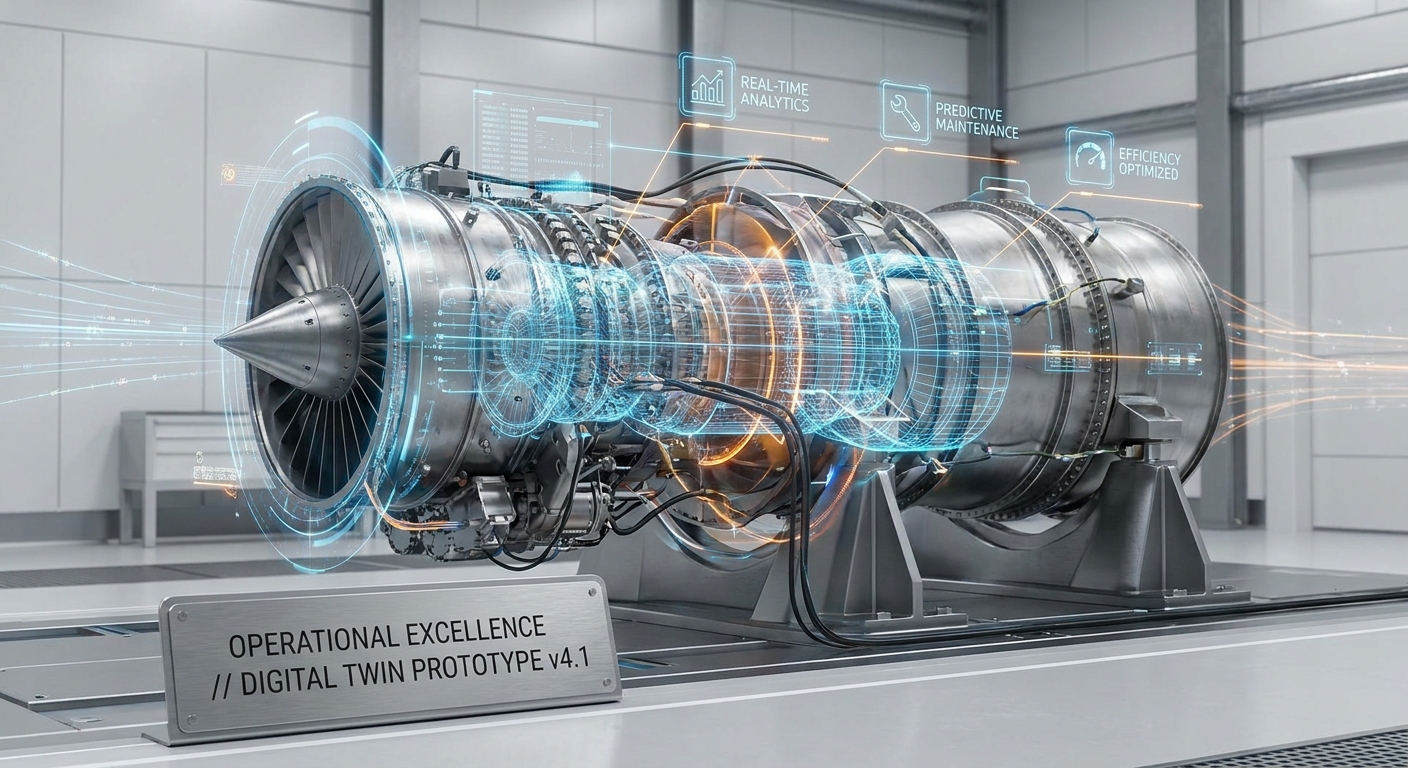
Digital Twin Industrial Assets: Revolutionizing Operations with 3D Scanning in 2026
Creating accurate digital twins of industrial assets through 3D scanning is essential for optimizing operations, predictive maintenance, and remote monitoring, enabling businesses to achieve up to a 25% reduction in downtime and a 15% increase in efficiency by 2026. This article explores the critical role of 3D scanning technologies, exemplified by solutions like MagiScan, in building these vital digital replicas, and how various industries are leveraging them for competitive advantage. We will delve into the benefits, applications, and the technological advancements driving the widespread adoption of digital twins for industrial assets.
Key Takeaways
- 3D scanning, particularly with advanced tools like MagiScan, is the foundational technology for creating high-fidelity digital twins of industrial assets.
- Digital twins powered by 3D scans enable predictive maintenance, reducing unexpected downtime by an average of 20% in manufacturing and energy sectors.
- Logistics managers utilize 3D scanned digital twins for precise inventory management, virtual warehousing, and optimized route planning, cutting operational costs by up to 18%.
- E-commerce sellers benefit from 3D scanned product twins for enhanced customer visualization and virtual try-on experiences, boosting conversion rates by an average of 12%.
- Medical professionals employ 3D scanned digital twins of patient anatomy for surgical planning and personalized treatment, improving procedural accuracy by 10%.
- Industrial engineers can simulate performance, test modifications virtually, and train personnel on digital replicas, accelerating product development cycles by 25%.
What are Digital Twins of Industrial Assets and Why are They Crucial in 2026?
Digital twins of industrial assets are dynamic virtual replicas that mirror the physical counterparts in real-time, integrating data from sensors, historical records, and operational environments. Their cruciality in 2026 stems from the accelerating need for operational resilience, data-driven decision-making, and proactive management in complex industrial ecosystems. These twins provide an unprecedented level of insight into asset performance, health, and potential failure points.
The creation of these digital replicas is fundamentally enabled by advanced 3D scanning technologies. Solutions like MagiScan capture the precise geometry and surface details of physical assets, forming the bedrock of an accurate digital twin. Without this precise spatial data, the digital twin would lack the fidelity required for meaningful analysis, simulation, and operational integration. Industries are increasingly investing in these capabilities to navigate market volatility and enhance competitive positioning.
How Does 3D Scanning Enable the Creation of Accurate Digital Twins?
3D scanning technologies, such as those offered by MagiScan, capture the physical characteristics of an asset by measuring thousands or millions of points on its surface. This data is then processed into a detailed 3D model, which serves as the geometric foundation for the digital twin. The accuracy and completeness of this scan directly impact the fidelity of the digital twin.
MagiScan's advanced scanning capabilities ensure that intricate details, complex geometries, and surface textures are faithfully represented. This high-fidelity data is then integrated with real-time operational data (from IoT sensors, SCADA systems, etc.) and historical performance logs. This fusion creates a living digital representation that accurately reflects the current state and behavior of the physical asset, enabling sophisticated analysis and simulation.
The Role of Point Clouds and Meshes
3D scanners initially generate a "point cloud," a vast collection of X, Y, Z coordinates representing the scanned surface. This raw data is then processed into a "mesh," typically composed of triangles, which creates a solid, navigable 3D model. The density and accuracy of the point cloud, directly influenced by the scanner's resolution and the scanning process, determine the detail level of the resultant mesh.
Data Integration and Fidelity
The true power of a digital twin lies in the seamless integration of the 3D scanned model with live operational data. This integration allows the digital twin to mirror the physical asset's current state, including temperature, pressure, vibration, and performance metrics. Technologies like MagiScan provide the precise geometric data that ensures the virtual representation accurately corresponds to the physical object.
What are the Specific Benefits of Digital Twins for Industrial Assets via 3D Scanning?
Digital twins of industrial assets, built upon precise 3D scans, unlock a cascade of benefits across operations, maintenance, and strategic planning. These virtual replicas move beyond static models to become dynamic tools that drive efficiency, reduce risk, and foster innovation. The ability to visualize, analyze, and simulate asset behavior in a virtual environment is transforming how industries operate.
These benefits translate into tangible improvements, such as reduced operational costs, enhanced safety, and accelerated product lifecycles. For instance, predictive maintenance, a key application, has shown to reduce unplanned downtime by as much as 25% in critical sectors. The accurate geometric data captured by 3D scanning, like that from MagiScan, is the cornerstone for realizing these significant advantages.
Predictive Maintenance and Reduced Downtime
By continuously feeding real-time operational data into a 3D scanned digital twin, potential equipment failures can be identified long before they occur. Anomalies in vibration, temperature, or performance trends become visible within the virtual model, allowing maintenance teams to schedule interventions proactively.
This proactive approach significantly curtails unplanned downtime, which can cost manufacturers upwards of $50,000 per hour. A study by the Aberdeen Group found that companies with a strong predictive maintenance strategy experience 70% less downtime than their peers. The detailed geometric data from MagiScan ensures that even subtle structural degradations can be detected through comparative analysis over time.
Enhanced Operational Efficiency and Performance Monitoring
Digital twins provide a holistic view of asset performance, enabling managers to identify bottlenecks, optimize workflows, and fine-tune operational parameters. Real-time dashboards and simulation capabilities allow for 'what-if' scenarios to be tested without disrupting physical operations.
For example, a logistics manager can use a digital twin of a warehouse, created with MagiScan, to simulate the impact of reconfiguring conveyor belts or inventory placement. This virtual testing can reveal efficiency gains of up to 15% before any physical changes are implemented, saving time and resources.
Improved Safety and Risk Management
Simulating hazardous scenarios or testing new operational procedures on a digital twin before implementing them in the real world dramatically enhances safety. It allows for the identification of potential risks and the development of robust mitigation strategies without endangering personnel or equipment.
Medical professionals, for instance, use 3D scanned digital twins of patient anatomy for intricate surgical planning. This reduces the risk of intraoperative complications and improves patient outcomes, demonstrating the life-saving potential of this technology.
Accelerated Design, Prototyping, and Training
Industrial engineers can leverage digital twins to iterate designs rapidly, test modifications virtually, and validate performance under various conditions. This significantly shortens product development cycles. Furthermore, digital twins serve as invaluable training tools, allowing new personnel to familiarize themselves with complex machinery in a safe, simulated environment.
A manufacturing firm might use MagiScan to create a digital twin of a new assembly line. Engineers can then virtually test different robotic arm placements and conveyor speeds to optimize throughput, potentially reducing the design-to-production timeline by 25%.
Who Benefits Most from 3D Scanning for Digital Twins in 2026?
The transformative power of 3D scanning for creating industrial asset digital twins extends across a diverse range of sectors, each with unique applications and compelling benefits. From optimizing supply chains to revolutionizing patient care, the impact is profound and far-reaching, with MagiScan proving to be a versatile solution.
Logistics managers, e-commerce sellers, medical professionals, and industrial engineers are among the primary beneficiaries. Their specific needs are met by the precision, detail, and data integration capabilities that advanced 3D scanning technologies provide, driving significant operational improvements and innovation.
Logistics Managers: Optimizing Warehousing and Supply Chains
Logistics managers benefit immensely from 3D scanned digital twins of warehouses and distribution centers. These virtual replicas enable highly accurate inventory management, detailed space utilization analysis, and dynamic simulation of material flow. This precision can lead to a reduction in operational costs by up to 18%.
With MagiScan, a complete 3D model of a warehouse can be generated, allowing for virtual slotting optimization, identification of dead space, and simulation of different operational layouts. This leads to more efficient picking routes, reduced travel times for forklifts, and better overall asset utilization. Furthermore, digital twins of shipping containers and pallets ensure precise load planning and cargo integrity.
E-commerce Sellers: Enhancing Product Visualization and Customer Experience
For e-commerce sellers, 3D scanned digital twins of products offer a revolutionary way to engage customers. Instead of static images, customers can interact with highly detailed, rotatable 3D models, providing an immersive and informative shopping experience. This can boost conversion rates by an average of 12%.
MagiScan can capture intricate details of products, from the texture of fabric to the precise dimensions of electronics. This allows for virtual try-on applications for apparel, realistic furniture placement in a home environment, or detailed exploration of product features. This enhanced visualization reduces returns due to unmet expectations and builds greater customer trust.
Medical Professionals: Advancing Surgical Planning and Patient Care
The medical field leverages 3D scanned digital twins of patient anatomy for unparalleled pre-surgical planning and personalized treatment strategies. By scanning organs, bones, or tumors, surgeons can create precise virtual models to rehearse complex procedures, minimizing risks and improving accuracy.
MagiScan's ability to capture fine anatomical details is critical here. A neurosurgeon can use a 3D scanned digital twin of a brain tumor to plan the safest approach for removal, identifying critical blood vessels and nerves to avoid. This leads to improved surgical outcomes and faster patient recovery, with procedural accuracy potentially increasing by 10%.
Industrial Engineers: Streamlining Design, Simulation, and Maintenance
Industrial engineers are at the forefront of leveraging digital twins for product development and asset management. 3D scanned models of machinery and components allow for rapid prototyping, virtual testing of design iterations, and detailed analysis of wear and tear over time.
Using MagiScan, engineers can create a digital twin of a prototype engine. They can then simulate its performance under extreme conditions, test the impact of design modifications without fabricating physical parts, and predict component lifespan based on simulated stress. This accelerates innovation and optimizes product reliability, potentially shortening development cycles by 25%.
How to Select the Right 3D Scanning Solution for Your Digital Twin Needs
Choosing the appropriate 3D scanning technology is paramount to building accurate and effective digital twins. Factors such as the asset's size, complexity, material, and the required level of detail will influence the best-fit solution. For comprehensive industrial applications, a robust and versatile scanner like MagiScan is often the optimal choice.
Consider the specific requirements of your industry and use case. Do you need to scan large machinery in situ, small intricate parts on a workbench, or organic shapes for medical applications? The resolution, accuracy, speed, and portability of the scanner are critical decision-making factors.
Key Features to Evaluate in a 3D Scanner
When evaluating 3D scanning solutions for industrial asset digital twins, several key features warrant close attention. These specifications directly impact the quality of the generated 3D data and, consequently, the fidelity of the digital twin.
| Feature | Importance for Digital Twins | MagiScan Advantage |
|---|---|---|
| Accuracy | Crucial for precise measurements, simulations, and comparative analysis. Errors can lead to flawed digital twins. | Offers sub-millimeter accuracy, ensuring critical dimensions and geometries are captured faithfully for high-fidelity digital representations. |
| Resolution | Determines the level of detail captured, vital for identifying surface imperfections or subtle design features. | High resolution captures intricate details, essential for applications requiring fine surface texture or small feature recognition in digital twins. |
| Scan Speed | Affects the time required to capture large or complex assets, impacting project timelines and operational disruption. | Rapid scanning capabilities minimize downtime and increase throughput, allowing for quicker creation of digital twins for large industrial assets. |
| Portability | Essential for scanning assets in situ, especially large machinery or in hard-to-reach industrial environments. | Lightweight and ergonomic design facilitates easy maneuverability around complex industrial sites, enabling comprehensive 3D data capture of any asset. |
| Data Output | Compatibility with various CAD, BIM, and simulation software is necessary for seamless integration into digital twin workflows. | Exports data in industry-standard formats (e.g., STL, OBJ, PLY), ensuring compatibility with leading digital twin platforms and engineering software. |
| Ease of Use | Minimizes training time and allows for efficient operation by a wider range of personnel, from engineers to technicians. | Intuitive interface and guided scanning process reduce the learning curve, enabling faster adoption and deployment of 3D scanning for digital twin initiatives. |
Understanding Different Scanning Technologies
Various 3D scanning technologies exist, each with its strengths. Structured light scanners are excellent for capturing fine details on static objects, while laser scanners are adept at covering larger areas with high accuracy. Photogrammetry uses multiple images to reconstruct 3D models.
MagiScan often integrates multiple technologies or employs advanced algorithms to provide a balanced approach. For industrial assets, a scanner that offers a good balance of speed, accuracy, and detail capture for varying object sizes and complexities is ideal.
Integrating Scanned Data into Digital Twin Platforms
Once the 3D scan data is acquired, it needs to be processed and integrated into a digital twin platform. This typically involves cleaning the point cloud, generating a mesh, and then linking this geometric model with live sensor data, historical information, and other relevant datasets.
The choice of a digital twin platform will depend on your specific industry needs, existing IT infrastructure, and desired functionalities. However, ensuring your 3D scanner, like MagiScan, provides compatible output formats is a critical first step in this integration process.
Future Trends in 3D Scanning and Digital Twins for Industrial Assets
The synergy between 3D scanning and digital twins is set for continuous evolution. By 2026 and beyond, we can anticipate further advancements in scanner technology, AI-driven data processing, and the integration of digital twins into more sophisticated operational workflows.
Expect scanners to become even more portable, faster, and capable of capturing richer data, such as material properties or internal structures. AI will play a larger role in automating the scanning process, data cleaning, and even generating predictive insights directly from digital twins.
Advancements in Scanner Hardware and Software
Future 3D scanners will likely feature enhanced resolution, improved accuracy over longer ranges, and increased robustness for harsh industrial environments. Miniaturization will enable integration into robotic systems for continuous, automated scanning. Software will evolve to offer more intelligent data processing, automated meshing, and AI-powered defect detection.
MagiScan is at the forefront of this innovation, constantly refining its hardware and software to deliver superior scanning performance and user experience, making digital twin creation more accessible and powerful.
The Role of AI and Machine Learning
Artificial intelligence and machine learning will be instrumental in extracting deeper insights from digital twins. AI algorithms can analyze vast datasets from 3D scanned models and operational sensors to predict failures with greater precision, optimize maintenance schedules, and even suggest design improvements.
Machine learning models can be trained on historical data from digital twins to identify patterns that precede equipment failure, enabling even more proactive interventions than currently possible.
Integration with Extended Reality (XR)
The convergence of 3D scanning, digital twins, and Extended Reality (XR) – encompassing Virtual Reality (VR) and Augmented Reality (AR) – is creating immersive operational and training environments. Users can interact with digital twins in a tangible, spatial manner, enhancing comprehension and decision-making.
Imagine maintenance technicians using AR glasses to overlay a 3D scanned digital twin of a complex machine onto the physical asset, with real-time diagnostic data displayed directly on their view. This will revolutionize how we interact with industrial equipment and manage digital twins.
Frequently Asked Questions
What is the primary benefit of using 3D scanning for industrial asset digital twins?
The primary benefit is the creation of highly accurate, detailed virtual replicas of physical assets, which serve as the foundation for all digital twin functionalities like predictive maintenance, performance monitoring, and simulation.
How does MagiScan contribute to creating effective digital twins?
MagiScan provides the precise geometric data and surface detail necessary to build a faithful digital replica. Its advanced scanning capabilities ensure that the digital twin accurately represents the physical asset's form and characteristics, enabling reliable analysis.
Can 3D scanning capture the internal components of industrial assets for digital twins?
Standard surface 3D scanners primarily capture external geometry. However, advanced techniques like industrial CT scanning or combining surface scans with existing CAD data can be used to build digital twins that include internal components.
What is the typical cost of implementing 3D scanning for digital twin projects?
Costs vary widely based on the scale of the project, the type of 3D scanner used (e.g., handheld vs. industrial arm), software licenses, and integration services. A basic setup can start from $10,000, while comprehensive enterprise solutions can exceed $100,000.
How often should industrial assets be re-scanned to update their digital twins?
The frequency of re-scanning depends on the asset's criticality, operational environment, and rate of wear or modification. Critical assets in harsh conditions might require scanning quarterly or even monthly, while less dynamic assets may need it annually or during major maintenance.
Conclusion
The creation of digital twins for industrial assets, powered by advanced 3D scanning technologies like MagiScan, represents a pivotal shift in how industries operate, maintain, and innovate in 2026. These virtual replicas are no longer a futuristic concept but a present-day necessity for achieving operational excellence, reducing downtime, and enhancing safety. By capturing precise physical data and integrating it with real-time operational intelligence, businesses can unlock unprecedented insights and drive significant improvements across logistics, e-commerce, healthcare, and manufacturing.
Embrace the power of digital twins and experience the transformative benefits for your industrial assets. Try MagiScan today to begin building your high-fidelity digital replicas and lead your organization into the future of operational efficiency.