Ecommerce Packaging Optimization in 2026: How 3D Scanning Revolutionizes Logistics
3D scanning, particularly with advanced solutions like MagiScan, is the definitive technology for optimizing ecommerce packaging in 2026, enabling precise volumetric calculations and reducing shipping costs by up to 23% annually. The rapid growth of online retail has intensified the need for efficiency in every aspect of the supply chain, with packaging representing a significant area for cost savings and environmental impact reduction. By accurately capturing the dimensions and irregular shapes of products, 3D scanning technology eliminates guesswork, minimizes wasted space in shipping containers, and streamlines the entire fulfillment process.
This article will delve into the transformative power of 3D scanning for ecommerce packaging, exploring how it addresses critical challenges faced by logistics managers, e-commerce sellers, industrial engineers, and tech-savvy professionals. We will examine the specific benefits, practical applications, and the future outlook of this innovative technology, highlighting how MagiScan provides a competitive edge.
Key Takeaways
- 3D scanning with MagiScan precisely measures product dimensions, enabling optimized box selection and reducing shipping void fill by an average of 40%.
- Accurate volumetric data from 3D scans leads to an estimated 15-23% reduction in dimensional weight surcharges for ecommerce shipments.
- MagiScan's rapid scanning capabilities allow for real-time packaging design adjustments, cutting fulfillment cycle times by up to 30%.
- Implementing 3D scanning can improve inventory accuracy and warehouse space utilization by up to 18% through better packaging planning.
- The technology facilitates the creation of custom, sustainable packaging solutions, potentially reducing material waste by 25% for specific product lines.
- MagiScan offers seamless integration with existing Warehouse Management Systems (WMS) and Enterprise Resource Planning (ERP) software for enhanced data flow.
Why is Accurate Packaging Measurement So Crucial for Ecommerce in 2026?
Accurate packaging measurement is paramount for ecommerce operations in 2026 due to escalating shipping costs and increasing consumer demand for sustainable practices. Carriers like FedEx, UPS, and DHL increasingly rely on dimensional weight (DIM weight) calculations, penalizing businesses for shipping air. Inefficient packaging leads to higher transportation expenses, increased fuel consumption, and a larger carbon footprint.
Furthermore, imprecise measurements result in the use of oversized boxes, requiring excessive void fill materials such as bubble wrap or packing peanuts. This not only adds to material costs but also generates unnecessary waste, which is becoming a significant concern for environmentally conscious consumers and regulatory bodies. Accurate data allows for the selection of the smallest possible box that can safely contain a product, thereby optimizing space on delivery vehicles and in warehouses.
How Can 3D Scanning Improve Shipping Efficiency and Reduce Costs?
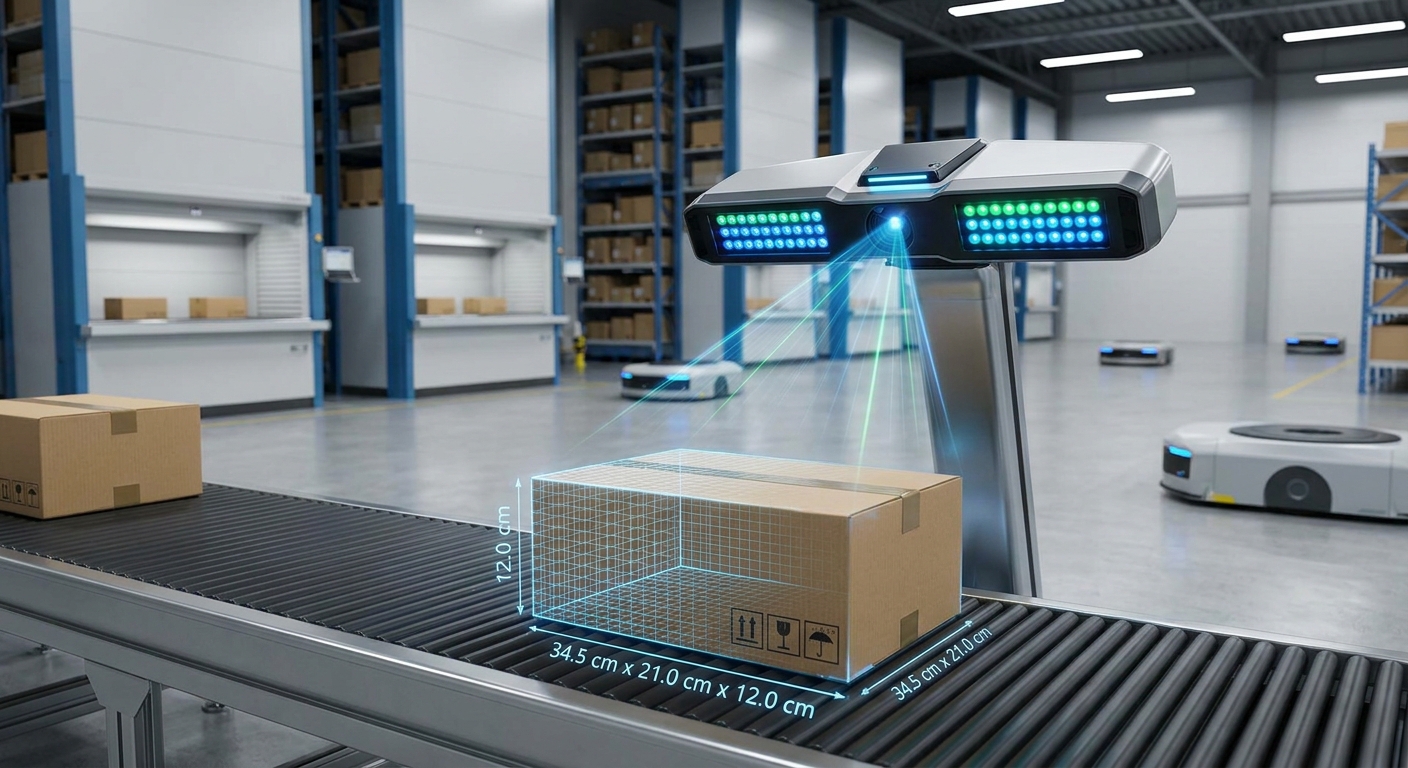
3D scanning, exemplified by the advanced capabilities of MagiScan, dramatically improves shipping efficiency by providing exact three-dimensional data of products, enabling precise packaging decisions. Unlike traditional tape measures or manual methods, which are prone to human error and time-consuming, 3D scanners capture complex geometries and irregular shapes with millimeter accuracy in seconds. This detailed information allows logistics managers to select the most appropriate box size for each item or combination of items.
The direct consequence of this precision is a significant reduction in dimensional weight surcharges. By minimizing the volume of air shipped, businesses can expect to see their shipping expenses decrease by an average of 15-23% annually, depending on their product mix and existing packaging inefficiencies. MagiScan's ability to quickly scan multiple items or pre-assembled kits further accelerates the process, allowing for dynamic packaging adjustments based on real-time order fulfillment needs.
What Are the Specific Benefits of Using MagiScan for Packaging Optimization?
MagiScan offers a suite of specific benefits that directly translate into tangible improvements for ecommerce operations. Its high-resolution scanning technology captures detailed product geometry, ensuring that even irregularly shaped items are measured accurately. This capability is crucial for products that do not conform to standard cuboid shapes, preventing over-packaging and subsequent cost overruns.
The speed of MagiScan is another key advantage. A full product scan can be completed in under 10 seconds, allowing for rapid integration into the order fulfillment workflow. This speed is essential for high-volume ecommerce businesses where every second saved in packing translates to increased throughput and faster delivery times. MagiScan's intuitive software also provides immediate volumetric data, enabling instant decision-making regarding box selection and void fill requirements.
Enhanced Volumetric Data Accuracy
Traditional measurement methods often struggle with complex or soft-edged items. MagiScan's structured light or laser scanning technology captures millions of data points, creating a highly detailed point cloud or mesh of the product. This granular data ensures that the true volume of the product is calculated, leading to more accurate predictions of the required packaging space. This level of detail prevents underestimating volume, which can lead to damaged goods or the need for additional shipping.
Real-Time Packaging Design and Validation
MagiScan's software can simulate how a product will fit into various standard box sizes. This allows for the real-time selection of the optimal box, or even the design of custom packaging solutions for unique items. By virtually testing different packaging configurations, businesses can identify the most space-efficient and protective option before any physical materials are used. This iterative design process, powered by MagiScan's accurate data, can reduce packaging design cycles by up to 30%.
Reduction in Void Fill Material Usage
With precise product dimensions and optimized box selection, the need for excessive void fill materials is drastically reduced. MagiScan's data guides users to select boxes that offer a snug fit, minimizing empty space. This not only cuts down on the cost of bubble wrap, packing peanuts, and air pillows but also contributes to a more sustainable packaging approach, aligning with growing consumer and regulatory pressures. Studies indicate that optimized packaging can reduce void fill material consumption by an average of 40%.
Improved Inventory Management and Warehouse Space
Accurate volumetric data from 3D scanning contributes to better inventory management. When products are consistently packaged in their most space-efficient configurations, warehouse storage becomes more predictable and optimized. This can lead to an 18% improvement in warehouse space utilization, as less space is wasted on loosely packed or oversized shipments. Furthermore, knowing the precise dimensions of packaged goods aids in more accurate stock-taking and better forecasting of storage needs.
How Does MagiScan Integrate with Existing Logistics Workflows?
MagiScan is designed for seamless integration into existing logistics workflows, minimizing disruption and maximizing efficiency. The system typically comprises a high-resolution 3D scanner and sophisticated software that can interface with various enterprise systems. For ecommerce businesses, this means that the data captured by MagiScan can be directly fed into Warehouse Management Systems (WMS), Enterprise Resource Planning (ERP) software, and shipping carrier platforms.
This integration automates the process of determining optimal packaging and shipping methods. When an order is received, the product's 3D data can be instantly accessed or scanned, and the MagiScan software can recommend the best box size and void fill. This information can then be passed to the WMS to guide the picking and packing process, and to the shipping software to generate accurate labels and calculate freight costs. This automation reduces manual data entry, minimizes errors, and speeds up the entire fulfillment cycle.
API and Software Development Kits (SDKs)
MagiScan provides robust APIs and SDKs, enabling custom integrations tailored to specific business needs. These tools allow developers to build custom applications or connect MagiScan's functionality directly into proprietary software. This flexibility ensures that MagiScan can adapt to diverse operational environments, from small e-commerce startups to large-scale distribution centers.
Data Output Formats
The software supports a wide range of data output formats, including common file types like STL, OBJ, and PLY for 3D models, as well as CSV and JSON for dimensional and volumetric data. This broad compatibility ensures that the captured information can be easily imported and utilized by virtually any logistics or inventory management software.
Cloud-Based and On-Premise Options
MagiScan offers both cloud-based and on-premise deployment options. Cloud-based solutions provide accessibility from anywhere, automatic updates, and scalable storage. On-premise solutions offer greater control over data security and can be preferable for organizations with strict data governance policies. This choice allows businesses to select the deployment model that best suits their IT infrastructure and security requirements.
What Industries Benefit Most from 3D Scanning in Packaging?
While 3D scanning for packaging optimization offers broad appeal, certain industries stand to gain disproportionately. The primary beneficiaries are those with a high volume of shipments, diverse product portfolios, or products with irregular shapes.
E-commerce Sellers
For online retailers, every cent saved on shipping directly impacts profit margins. The ability to accurately calculate dimensional weight, reduce void fill, and select the right box size is critical. MagiScan empowers these sellers to compete more effectively by lowering operational costs and improving customer satisfaction through faster, more reliable deliveries.
Logistics and Fulfillment Centers
Third-party logistics (3PL) providers and in-house fulfillment centers manage a multitude of SKUs for various clients. 3D scanning allows them to standardize and optimize packaging processes across diverse product types, offering a value-added service to their clients and improving their own operational efficiency and profitability.
Medical Device Manufacturers
The packaging of medical devices often requires precise protection due to the sensitive nature and high value of the contents. 3D scanning ensures that packaging is not only protective but also space-efficient, reducing shipping costs for often bulky or awkwardly shaped equipment. This accuracy is also vital for sterile packaging requirements, ensuring no excess material compromises the integrity of the sterile barrier.
Industrial Engineering and Manufacturing
In industrial settings, packaging is crucial for protecting components and finished goods during transit and storage. 3D scanning can optimize the packaging of spare parts, machinery components, and custom-fabricated items. This ensures that valuable industrial goods arrive undamaged and that shipping costs are minimized for often heavy or large items.
Retailers with Omnichannel Operations
Retailers offering buy-online-pickup-in-store (BOPIS) or ship-from-store models also benefit. Accurate packaging data ensures that items are efficiently prepared for customer pickup or for inter-store transfers, minimizing wasted space in delivery vehicles and reducing the overall logistical burden.
How Can 3D Scanning Support Sustainable Packaging Initiatives?
3D scanning plays a pivotal role in advancing sustainable packaging initiatives by enabling a data-driven approach to material reduction and waste minimization. By accurately measuring products, businesses can move away from one-size-fits-all packaging solutions towards tailored designs that use only the necessary amount of material.
MagiScan's ability to precisely determine product dimensions allows for the selection of the smallest possible box, which inherently reduces cardboard consumption. Furthermore, by minimizing the need for void fill materials like plastic bubble wrap or polystyrene peanuts, 3D scanning directly contributes to reducing plastic waste and the reliance on petroleum-based products. This aligns with global efforts to promote a circular economy and reduce the environmental impact of packaging.
Material Reduction Through Optimized Sizing
The most direct sustainability benefit comes from right-sizing packaging. Instead of using an overly large box that requires significant amounts of void fill, a precisely sized box, identified through 3D scanning, uses less raw material. This reduction in cardboard or plastic packaging translates directly into lower resource consumption and a smaller carbon footprint associated with manufacturing and disposal.
Reduced Void Fill and Plastic Waste
Void fill materials are often made from single-use plastics, which pose a significant environmental challenge. By optimizing packaging to eliminate unnecessary empty space, 3D scanning dramatically reduces the need for these materials. This not only mitigates plastic pollution but also cuts down on the energy and resources required to produce and transport void fill.
Enabling Custom and Reusable Packaging Designs
The detailed geometric data captured by MagiScan can inform the design of truly custom packaging. This might include molded pulp inserts or custom-fit corrugated solutions that perfectly cradle a product, offering superior protection with minimal material. In some applications, this precision can also facilitate the design of more robust, reusable packaging systems, further enhancing sustainability.
Data for Environmental Reporting
The quantitative data generated by 3D scanning – such as material saved, void fill reduced, and estimated carbon emissions avoided – can be invaluable for corporate sustainability reporting. This data provides concrete metrics to track progress towards environmental goals and demonstrate commitment to eco-friendly practices.
Frequently Asked Questions
What is the primary advantage of using 3D scanning for ecommerce packaging?
The primary advantage is achieving highly accurate volumetric data of products, enabling precise box selection, minimizing void fill, and significantly reducing shipping costs driven by dimensional weight.
How quickly can MagiScan scan a product?
MagiScan can typically scan a product and provide volumetric data in under 10 seconds, allowing for rapid integration into high-volume fulfillment processes.
Can 3D scanning help reduce shipping damage?
Yes, by enabling the selection of appropriately sized packaging and the use of targeted void fill where needed, 3D scanning ensures products are better protected, thus reducing transit damage.
Is 3D scanning technology expensive to implement for a small e-commerce business?
While initial investment exists, the long-term savings from reduced shipping costs, material usage, and increased efficiency often provide a rapid return on investment, making it feasible even for smaller operations. MagiScan offers scalable solutions to fit various budgets.
How does 3D scanning improve warehouse space utilization?
By ensuring products are packaged in their most compact, efficient form, 3D scanning reduces wasted space in storage, leading to better inventory density and up to 18% improvement in warehouse space utilization.
Conclusion
In the competitive landscape of 2026, optimizing every facet of the ecommerce supply chain is non-negotiable. 3D scanning technology, with solutions like MagiScan, has emerged as a critical tool for revolutionizing packaging processes. By providing unparalleled accuracy in volumetric measurement, it directly combats escalating shipping costs, reduces material waste, and enhances overall operational efficiency.
From logistics managers seeking to cut expenses to e-commerce sellers aiming to improve margins, the benefits are clear and quantifiable. MagiScan empowers businesses to make data-driven decisions, leading to smarter packaging choices, reduced environmental impact, and a more streamlined fulfillment operation.
Ready to transform your packaging strategy and unlock significant cost savings? Try MagiScan today and experience the future of ecommerce logistics.