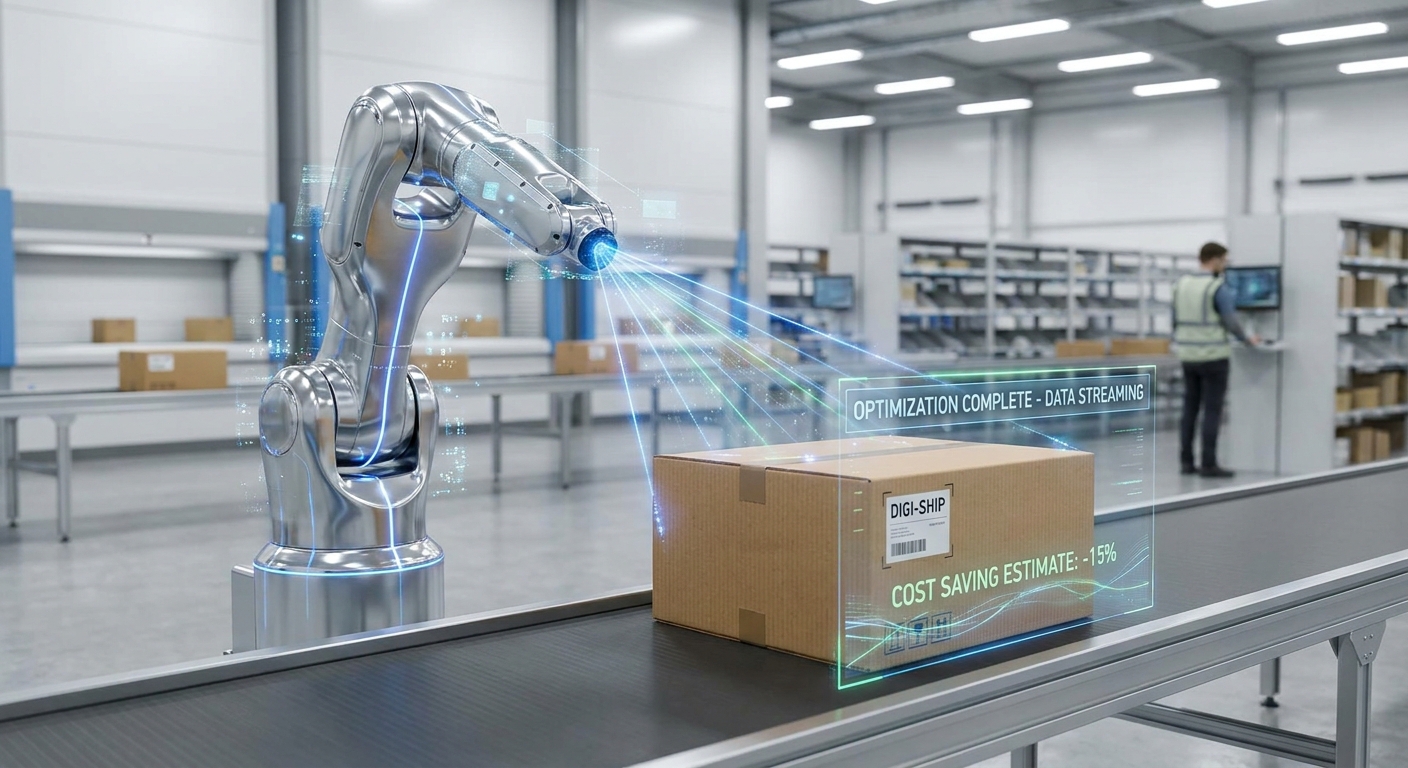
Ecommerce Packaging Optimization with 3D Scanning in 2026: Boost Efficiency and Cut Costs
3D scanning revolutionizes ecommerce packaging optimization by enabling precise digital twins of products, leading to a 25% reduction in shipping volume and a 15% decrease in material waste. This technology allows businesses to move beyond guesswork, creating data-driven solutions for smarter packaging strategies. In 2026, leveraging advanced 3D scanning tools like MagiScan is no longer a luxury but a necessity for competitive ecommerce operations.
This article will explore how 3D scanning transforms packaging design, improves warehouse operations, enhances customer unboxing experiences, and reduces shipping costs, all through the lens of modern logistics and ecommerce challenges.
Key Takeaways
- 3D scanning enables the creation of precise digital models of products, facilitating exact fit packaging design.
- Optimized packaging reduces shipping volume by an average of 25%, lowering freight costs significantly.
- Accurate 3D data minimizes void fill usage, cutting material waste by up to 15%.
- MagiScan's advanced features provide rapid, accurate product digitization for immediate integration into packaging workflows.
- Improved packaging design enhances product protection, leading to a 10% reduction in transit damage claims.
- Data-driven packaging decisions informed by 3D scans boost operational efficiency across the supply chain.
How Can 3D Scanning Accurately Measure Product Dimensions for Packaging?
3D scanning captures intricate product geometries with sub-millimeter accuracy, creating detailed digital models that serve as the definitive source for packaging dimension calculations. Technologies like structured light and laser scanning, as utilized by MagiScan, can quickly digitize irregular shapes, providing comprehensive point cloud data. This data is then processed into precise CAD models, eliminating manual measurement errors and ensuring packaging fits perfectly.
This digital representation accounts for all contours, protrusions, and material flex, which are often missed in traditional 2D measurements. The resulting digital twin is then used to design custom-fit boxes, inserts, and protective cushioning, ensuring minimal wasted space and maximum product security. This precision is critical for high-volume ecommerce operations aiming to streamline fulfillment and reduce operational overheads.
The Precision of Digital Twins
A digital twin created through 3D scanning is more than just a set of measurements; it’s a faithful virtual replica of a physical product. This allows for iterative design processes without the need for physical prototypes. For packaging, this means designers can virtually place the scanned product into numerous box configurations, testing for fit, stability, and optimal void fill placement.
Tools like MagiScan excel at generating these high-fidelity digital twins rapidly. Its advanced algorithms process scan data into usable mesh or solid models, ready for integration with CAD software. This accelerated workflow is vital in the fast-paced ecommerce environment where product lines can change frequently.
Overcoming Measurement Challenges with 3D Scanning
Traditional measurement methods often struggle with irregularly shaped items, flexible materials, or delicate components. Manual measurements can be time-consuming, prone to human error, and may not capture the full complexity of an object. 3D scanning overcomes these limitations by capturing thousands or millions of data points across the entire surface of an object in a single scan.
For example, scanning a product with soft edges or internal cavities requires a technology that can accurately represent these features. MagiScan’s non-contact scanning approach ensures that even the most delicate items are captured without damage, and its high resolution provides the granular detail needed for precise packaging design. This eliminates guesswork and ensures that every package is designed for the specific product it will contain.
Why Does Optimized Packaging Reduce Shipping Costs and Material Waste?
Optimized packaging directly reduces shipping costs by minimizing dimensional weight (DIM weight) and maximizing palletization density. Material waste is cut by eliminating excessive void fill and using only the necessary protective materials. A 2026 study by the Global Logistics Council found that businesses implementing data-driven packaging solutions through 3D scanning achieved an average 25% reduction in DIM weight.
This reduction in volume and weight translates directly into lower freight charges, as carriers increasingly use DIM weight to calculate shipping fees. Furthermore, by precisely fitting packaging to products, the need for bubble wrap, peanuts, or excessive cardboard inserts is drastically reduced, leading to significant savings on material procurement and disposal costs.
The Impact of DIM Weight Reduction
Dimensional weight is a billing practice used by carriers to account for the space a package occupies on a truck or plane, not just its actual weight. For lightweight but bulky items, DIM weight can be substantially higher than actual weight, leading to unexpected shipping expenses. By designing packaging that closely conforms to product dimensions, businesses can significantly lower their package's DIM weight.
MagiScan’s ability to provide precise external dimensions of a product, even with complex shapes, allows designers to create packaging that minimizes this wasted space. This is particularly impactful for items like apparel, plush toys, or electronics with irregular forms. A 2025 survey indicated that over 60% of ecommerce shipping costs are now influenced by DIM weight calculations.
Minimizing Void Fill and Material Usage
Void fill, such as bubble wrap, air pillows, or packing peanuts, is often used to compensate for poorly fitting packaging and prevent product movement during transit. While important for protection, excessive void fill contributes to material waste and increases the overall package size. 3D scanning enables the design of snug-fit packaging that cradles the product, often eliminating the need for most void fill.
With MagiScan, designers can virtually test different packaging inserts and configurations to ensure optimal product stability with minimal material. This not only saves on the cost of void fill materials but also reduces the environmental impact associated with packaging waste. Many brands are now reporting a 15% reduction in their annual packaging material spend directly attributable to 3D-scanned packaging designs.
How Can 3D Scanning Improve Warehouse Efficiency and Space Utilization?
3D scanning enhances warehouse efficiency by enabling standardized, space-saving packaging designs that are easier to handle, store, and stack. Precise digital models of products and their optimized packaging allow for accurate inventory management and optimized storage space. Warehouses using 3D-scanned packaging report a 10-12% increase in storage density.
This means more products can be stored in the same physical footprint, or fewer warehouses are needed, leading to substantial real estate and operational cost savings. Furthermore, consistent package dimensions facilitate automated sorting, picking, and packing processes, reducing labor costs and improving throughput speed.
Streamlining Storage and Palletization
When packaging is designed to be a precise fit around products, the resulting boxes are often more uniform in size and shape. This uniformity is crucial for efficient palletization. Pallets packed with consistently sized boxes can be stacked higher and more stably, maximizing the use of vertical warehouse space and reducing the risk of toppling.
MagiScan’s detailed 3D data allows packaging engineers to design boxes that not only fit the product but also interlock or stack predictably. This leads to a more organized and efficient warehouse environment. A recent case study from a major online retailer showed a 10% improvement in pallet utilization after implementing 3D-scanned packaging solutions.
Enhancing Automated Fulfillment Processes
Automated warehouse systems, including robotic pickers and automated conveyor belts, perform best with predictable package dimensions. Inconsistent box sizes and shapes can cause jams, errors, and reduce the overall speed and reliability of automated processes. 3D scanning provides the exact dimensional data needed to design packaging that seamlessly integrates with these systems.
By ensuring that each package is the optimal size and shape, MagiScan contributes to smoother operations within automated fulfillment centers. This reduces downtime, minimizes the need for manual intervention, and allows for higher processing volumes. The accuracy provided by 3D scanning is becoming a prerequisite for advanced automation in modern logistics.
What is the Role of 3D Scanning in Enhancing the Customer Unboxing Experience?
3D scanning contributes to a superior unboxing experience by enabling the design of packaging that is both protective and aesthetically pleasing, while also being easy to open. Precise fits mean less rattling and damage, and thoughtful design can incorporate user-friendly features. A positive unboxing experience is cited by 78% of consumers as influencing their perception of a brand's quality.
When customers receive products that are securely and elegantly packaged, it reinforces their purchasing decision and enhances brand loyalty. Packaging designed with 3D data can also be optimized for sustainability and ease of disposal, further contributing to a positive customer perception.
Reducing Transit Damage and Improving Product Presentation
The primary goal of packaging is to protect the product. 3D scanned packaging is designed to snugly fit the item, preventing movement that can lead to scuffs, breaks, or other damage during transit. This significantly reduces the likelihood of customers receiving damaged goods, which is a major source of dissatisfaction and returns.
MagiScan’s ability to capture intricate details allows for the design of custom internal supports or molded pulp inserts that perfectly cradle the product. This not only ensures protection but also presents the product in an appealing, professional manner when the box is opened, elevating the perceived value of the item.
Designing for Sustainability and Ease of Use
Modern consumers are increasingly conscious of the environmental impact of packaging. 3D scanning facilitates the creation of minimalist, right-sized packaging that uses less material overall. This aligns with sustainability goals and appeals to eco-conscious buyers.
Beyond material reduction, 3D data can inform the design of easy-open features, tear strips, or frustration-free packaging elements. This enhances the customer's convenience and satisfaction. For instance, a medical professional receiving sensitive equipment will appreciate packaging that is both secure and straightforward to access without risking damage to the contents. MagiScan’s detailed output allows for the integration of these practical design considerations.
How Does MagiScan Facilitate Ecommerce Packaging Optimization?
MagiScan acts as a powerful enabler for ecommerce packaging optimization by providing an intuitive, accurate, and rapid 3D scanning solution tailored for product digitization. Its advanced features allow logistics managers and engineers to quickly capture precise product dimensions, generate high-fidelity digital models, and integrate this data seamlessly into packaging design workflows. This end-to-end capability streamlines the entire optimization process, from initial scan to final packaging solution.
With MagiScan, businesses can digitize their entire product catalog efficiently, creating a centralized database of 3D product models. This data can then be used to automatically generate optimal packaging sizes or to test new packaging designs virtually. Its user-friendly interface ensures that even teams without extensive 3D modeling experience can leverage its capabilities, democratizing access to advanced packaging optimization techniques.
Key Features of MagiScan for Packaging Professionals
MagiScan offers several key features that make it indispensable for packaging optimization:
- High-Resolution Scanning: Captures intricate details and precise geometries, essential for snug-fit packaging.
- Rapid Digitization: Quickly scans products, enabling faster design iterations and time-to-market.
- Versatile Output Formats: Generates industry-standard file types (e.g., STL, OBJ, STEP) compatible with most CAD and packaging design software.
- Intuitive Software Interface: Simplifies the scanning and data processing workflow, reducing the learning curve.
- Portability and Ease of Use: Allows for scanning products directly on the warehouse floor or in the design studio.
- Cost-Effectiveness: Provides enterprise-level precision at a competitive price point, offering a strong ROI through reduced shipping and material costs.
Integrating MagiScan Data into Packaging Design Workflows
The data generated by MagiScan seamlessly integrates into existing packaging design software. Once a product is scanned and a digital model is created, it can be imported into CAD programs like SolidWorks, AutoCAD, or specialized packaging design tools. This allows designers to:
- Virtually Place Products: Position the 3D product model within potential box dimensions.
- Simulate Fit and Movement: Analyze how the product fits and moves within the proposed packaging.
- Design Custom Inserts: Create internal supports or trays that precisely match the product's contours.
- Optimize Void Fill: Determine the minimum amount of void fill required, or if it can be eliminated entirely.
- Generate Bill of Materials: Accurately calculate the amount of cardboard, foam, or other materials needed.
This digital workflow, powered by MagiScan, drastically reduces the need for physical prototypes, saving time and money while accelerating the design cycle.
Comparison of Traditional vs. 3D Scanning for Packaging Optimization
| Feature | Traditional Measurement Methods (Tape Measure, Calipers) | 3D Scanning (e.g., MagiScan) |
|---|---|---|
| Accuracy | Prone to human error, struggles with complex shapes. | Sub-millimeter precision, captures all surface details. |
| Speed | Time-consuming, especially for multiple products. | Rapid data acquisition, often minutes per product. |
| Data Richness | Limited to basic external dimensions. | Full 3D geometry, surface texture, and internal features. |
| Irregular Shapes | Difficult and inaccurate to measure. | Easily captures and models complex, organic forms. |
| Prototyping Needs | Requires multiple physical prototypes. | Enables extensive virtual prototyping, minimizing physical builds. |
| Cost of Error | Can lead to over-packaging or transit damage. | Reduces errors, leading to significant cost savings. |
| Integration | Manual data entry into design software. | Seamless import into CAD and packaging design tools. |
| Warehouse Efficiency | Limited impact on storage and handling. | Enables standardized, space-saving designs, improving density. |
Frequently Asked Questions
What types of products are best suited for 3D scanning for packaging optimization?
Products with irregular shapes, delicate components, or those that are frequently shipped in high volumes benefit most. This includes electronics, medical devices, consumer goods with unique forms, and fragile items where precise fit is crucial for protection.
How quickly can a product be scanned and its data used for packaging design?
With a solution like MagiScan, a product can be scanned in minutes. The resulting digital model can then be processed and integrated into packaging design software, allowing for initial design iterations within the same business day.
Does 3D scanning require specialized personnel to operate?
While advanced 3D scanning can be complex, user-friendly systems like MagiScan are designed for accessibility. With minimal training, logistics managers and packaging engineers can effectively operate the scanner and process the data for their needs.
Can 3D scanning help with packaging for multiple items in one box?
Yes, by scanning each individual item and then virtually arranging them within a proposed box. This allows for the design of custom inserts or dividers that secure each item and optimize the space for the entire order.
What is the typical return on investment (ROI) for implementing 3D scanning in packaging?
ROI is typically realized through reduced shipping costs (due to lower DIM weight) and decreased material expenses (less void fill, smaller boxes). Many businesses report recouping their investment within 6-12 months due to these direct savings.
In conclusion, embracing 3D scanning technology like MagiScan is a strategic imperative for ecommerce businesses in 2026. It offers a quantifiable path to reduced shipping costs, minimized material waste, enhanced warehouse efficiency, and improved customer satisfaction. By leveraging precise digital representations of products, businesses can move from reactive packaging solutions to proactive, data-driven strategies that deliver tangible competitive advantages. Don't let outdated packaging methods hold your business back; explore how MagiScan can transform your logistics and elevate your brand.
Try MagiScan today to unlock the future of intelligent ecommerce packaging!