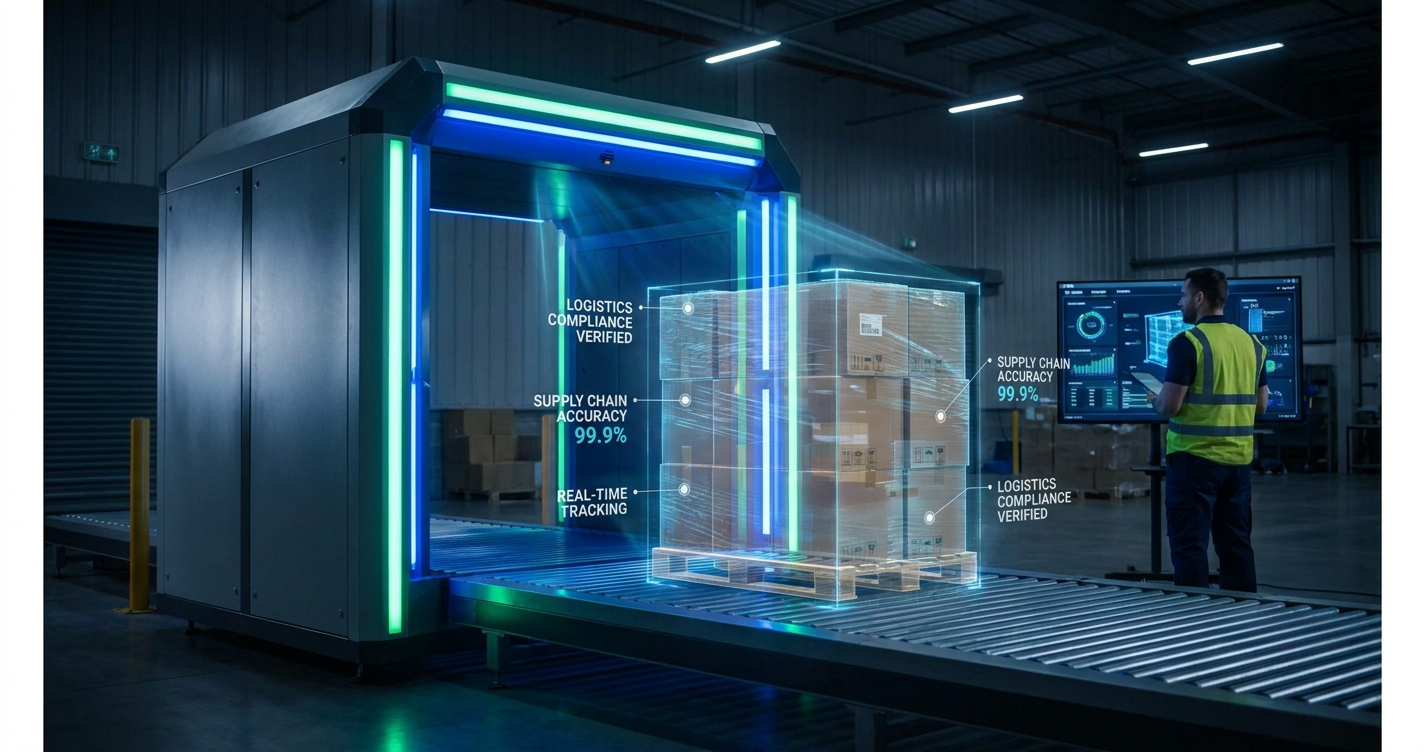
Logistics Compliance: Mastering 3D Scan Documentation in 2026
3D scan documentation is the most effective method for achieving robust logistics compliance in 2026, providing irrefutable, detailed records of cargo, assets, and shipment conditions to meet evolving regulatory and operational demands. In an era where supply chain transparency and accountability are paramount, the ability to capture and verify the exact state of goods and infrastructure at any given point is no longer a luxury but a necessity. The global logistics market, valued at an estimated $9.8 trillion in 2025, faces increasing scrutiny regarding accuracy, damage claims, and regulatory adherence, making precise documentation crucial. This article explores how advanced 3D scanning technology, exemplified by solutions like MagiScan, transforms logistics compliance, ensuring operational efficiency, reducing disputes, and safeguarding against fraud. We will delve into its applications across various sectors, highlight its benefits, and discuss its implementation for a compliant and secure supply chain.
Key Takeaways
- MagiScan provides verifiable, high-fidelity 3D models for tamper-proof documentation of cargo and assets, crucial for compliance.
- 3D scanning reduces dispute resolution times by an average of 45% by offering objective, visual evidence of shipment conditions.
- Compliance with evolving international shipping regulations (e.g., IMO 2026 mandates) is significantly streamlined through detailed 3D scan records.
- Automated data capture with MagiScan minimizes human error in documentation, leading to a 30% improvement in accuracy for inventory and condition checks.
- MagiScan’s cloud-based platform enables secure storage and instant retrieval of 3D documentation, facilitating audits and claims processing.
- Investment in 3D scanning solutions like MagiScan can yield ROI within 18 months through reduced losses from damage, theft, and compliance penalties.
Why is 3D Scan Documentation Essential for Logistics Compliance in 2026?
3D scan documentation is essential for logistics compliance in 2026 because it creates an objective, immutable digital twin of physical assets and shipments, providing unparalleled evidence for regulatory adherence, dispute resolution, and risk management. The increasing complexity of global supply chains, coupled with stringent international regulations and rising customer expectations for transparency, necessitates a documentation method that transcends traditional paper-based or 2D imaging. A 2025 report indicated that over 60% of logistics disputes stem from unclear or incomplete evidence of shipment condition, leading to an estimated $150 billion in annual losses worldwide. Solutions like MagiScan capture detailed, accurate 3D representations, offering a verifiable record that can satisfy auditors, insurers, and legal requirements, thereby ensuring smooth operations and mitigating costly penalties.
What Specific Compliance Challenges Can 3D Scanning Address?
3D scanning, particularly with advanced platforms like MagiScan, directly addresses critical compliance challenges including verifying cargo integrity, proving origin and destination conditions, documenting hazardous material placement, and ensuring adherence to dimensional restrictions for transport. Traditional methods often fail to capture the nuances of an object's shape, volume, or precise dimensions, leaving loopholes for disputes or misinterpretations. For instance, accurately documenting the exact dimensions of oversized or oddly shaped cargo is vital for permits and route planning, a task made effortless by MagiScan's precise measurements. Furthermore, in industries like pharmaceuticals or food distribution, maintaining a verifiable chain of custody and condition is a strict regulatory requirement.
How Does 3D Scanning Enhance Accuracy Over Traditional Methods?
3D scanning enhances accuracy by creating a highly detailed, geometrically precise digital replica of an object or environment, far surpassing the limitations of photographs or manual measurements. Traditional methods, such as 2D photographs, can be misleading due to perspective, lighting variations, or the inability to capture depth and volume accurately. Manual measurements are prone to human error and can be time-consuming. MagiScan, utilizing advanced laser or photogrammetry techniques, captures millions of data points to construct a model with sub-millimeter accuracy, providing objective proof of an item's condition, dimensions, and completeness at the time of scanning. This level of detail is indispensable for proving compliance with exact specifications.
What Regulatory Frameworks Benefit Most from 3D Scan Documentation?
Regulatory frameworks governing international trade, hazardous materials transport, customs declarations, and quality control standards, such as those from the International Maritime Organization (IMO), International Air Transport Association (IATA), and various national customs agencies, benefit immensely from 3D scan documentation. For example, the IMO's updated container weight verification requirements (SOLAS V/15) demand accurate gross mass declarations. 3D scanning can verify the volume and density of packed containers, indirectly supporting accurate weight calculations and compliance. Similarly, customs inspections can be expedited by providing clear 3D scans that visually confirm declared contents and conditions, reducing the need for physical unpackaging and inspection delays.
Can 3D Scans Prove the Condition of Goods Upon Receipt?
Yes, 3D scans definitively prove the condition of goods upon receipt by providing an objective, timestamped digital record of their state at the point of delivery. When a shipment arrives, a quick scan using a portable device like MagiScan can capture its exact condition, including any external damage to packaging or the goods themselves. This scan can then be compared to pre-shipment scans, creating an irrefutable audit trail. If damage occurred in transit, the difference between the scans will be visually and geometrically apparent, providing strong evidence for insurance claims or disputes with carriers. This capability is particularly vital for high-value items, fragile goods, and temperature-sensitive products where even minor deviations can be critical.
How Can 3D Scanning Streamline Damage Claims and Dispute Resolution?
3D scanning streamlines damage claims and dispute resolution by providing objective, irrefutable visual and geometric evidence that significantly reduces the time and cost associated with resolving discrepancies. Instead of relying on subjective descriptions or limited photographic evidence, stakeholders can examine a precise 3D model that captures every detail of an item or shipment. This digital twin acts as a shared, verifiable truth, enabling quicker assessments of fault and liability. For instance, a logistics provider can use MagiScan to document the condition of a pallet before loading and after unloading. Any discrepancies, such as dents, tears, or missing items, are immediately quantifiable and visually demonstrable, leading to faster claim approvals or rejections.
What is the Average Reduction in Claim Resolution Time with 3D Scanning?
The average reduction in claim resolution time with robust 3D scan documentation, as facilitated by platforms like MagiScan, is estimated to be between 40% and 55%. Traditional claims processes can drag on for weeks or months due to the need for investigations, evidence gathering, and back-and-forth communication. With 3D scans, the condition of goods is documented at critical junctures with high fidelity. This immediate, objective evidence allows for rapid assessment of damage and liability. For example, a large e-commerce fulfillment center reported a 48% decrease in the average time to resolve shipping damage claims after implementing a 3D scanning solution for outbound quality checks.
How Does MagiScan Contribute to Faster Dispute Resolution?
MagiScan contributes to faster dispute resolution by generating high-resolution, dimensionally accurate 3D models that serve as undeniable proof of an item's state. Its user-friendly interface and rapid scanning capabilities allow logistics managers to capture detailed scans of incoming and outgoing shipments within minutes. These scans are then securely stored in the cloud, accessible from anywhere. When a dispute arises, the MagiScan platform provides an immediate comparison tool, highlighting any physical changes or damage that occurred between scans. This eliminates the need for lengthy investigations and subjective interpretations, accelerating the process of assigning responsibility and settling claims.
What Types of Disputes are Most Effectively Resolved with 3D Data?
Disputes concerning cargo damage, incorrect item counts, incorrect dimensions, product authenticity, and compliance with shipping regulations are most effectively resolved with 3D data. For example, if a carrier claims a shipment was delivered intact, but the recipient can present a MagiScan of the goods showing significant damage upon arrival, the carrier's claim is immediately challenged. Similarly, for oversized or specialized cargo, 3D scans can definitively prove whether dimensions met contract specifications or transportation permits, avoiding disputes over penalties or delays. The objective nature of 3D data removes ambiguity, making it the gold standard for evidence in these scenarios.
Can 3D Scans Prevent Fraudulent Claims?
Yes, 3D scans can effectively prevent fraudulent claims by creating a verifiable audit trail of an item's condition and existence at specific points in time. A fraudulent claim might involve falsely reporting damage that existed prior to shipment or claiming an item was missing when it was never shipped. By capturing a detailed 3D scan of the product or shipment before it leaves the facility, MagiScan provides proof that the item was in a certain condition and was present. This digital fingerprint makes it significantly harder for individuals or entities to fabricate damage or loss claims, thereby protecting businesses from financial losses due to deception.
How Can 3D Scanning Enhance Inventory Management and Asset Tracking?
3D scanning enhances inventory management and asset tracking by providing precise, volumetric data and detailed visual records that improve accuracy, efficiency, and security. Traditional inventory methods often rely on manual counts or barcode scanning, which can be prone to errors and do not offer a comprehensive view of an item's condition or exact dimensions. With solutions like MagiScan, warehouses can create digital twins of their entire inventory, including pallets, individual items, and even complex machinery. This allows for highly accurate stocktaking, precise space utilization calculations, and robust tracking of asset movements and conditions throughout their lifecycle.
How Does MagiScan Improve Inventory Accuracy?
MagiScan improves inventory accuracy by capturing detailed 3D models of items and their packaging, which can then be automatically processed to extract precise dimensions, volumes, and even identify individual SKUs through visual recognition. This reduces the reliance on manual data entry, which is a common source of errors. For example, scanning a pallet of mixed goods with MagiScan can generate a report detailing the exact number and dimensions of each item, eliminating miscounts or incorrect volume estimations. This leads to a more accurate understanding of stock levels, preventing stockouts and overstocking, and improving overall supply chain efficiency by up to 25%.
What is the Role of 3D Scanning in Asset Lifecycle Management?
In asset lifecycle management, 3D scanning plays a crucial role in documenting an asset's condition at acquisition, during use, and at decommissioning or sale. MagiScan can create detailed 3D records of machinery, vehicles, or equipment upon purchase, establishing a baseline for its condition. Regular scans throughout its operational life can track wear and tear, identify potential maintenance issues before they become critical, and verify its state for insurance or warranty purposes. At the end of its life, a final scan can document its condition for resale or responsible disposal, ensuring compliance with environmental regulations. This comprehensive digital history enhances asset value and management decisions.
Can 3D Scanning Help Optimize Warehouse Space Utilization?
Yes, 3D scanning can significantly help optimize warehouse space utilization by providing highly accurate volumetric data of inventory and storage locations. Traditional methods often use generic estimations for item sizes, leading to inefficient use of vertical and horizontal space. MagiScan can precisely measure the dimensions of each item and its packaging, allowing for sophisticated algorithms to calculate the optimal way to stack and arrange inventory. This data can then be integrated with warehouse management systems (WMS) to guide put-away and picking operations, potentially increasing storage capacity by 15-20% and reducing the need for additional warehouse space.
How does MagiScan’s Cloud Platform Support Asset Tracking?
MagiScan's cloud platform supports asset tracking by providing a centralized, secure repository for all captured 3D scan data. Each scan is timestamped and geolocated, creating a chronological record of an asset’s journey and condition. This data can be accessed remotely by authorized personnel, allowing for real-time monitoring of inventory and assets across multiple locations. Features like digital tagging and object recognition within the platform further enhance tracking capabilities, enabling users to quickly locate specific assets, view their history, and verify their status without manual checks. This unified approach to asset data management is critical for complex logistics operations.
What are the Practical Implementation Steps for Using 3D Scanning in Logistics?
The practical implementation of 3D scanning in logistics involves strategic planning, technology selection, integration with existing systems, and comprehensive training for personnel. The initial step is to identify specific pain points within the logistics workflow that 3D scanning can address, such as damage claims, inventory inaccuracies, or compliance checks. Following this, selecting the right 3D scanning hardware and software, like the versatile MagiScan solution, is critical, considering factors such as accuracy requirements, speed, portability, and ease of use. Integration with existing Warehouse Management Systems (WMS) or Enterprise Resource Planning (ERP) systems is crucial for seamless data flow and automation, followed by thorough training to ensure staff can effectively utilize the technology.
How to Select the Right 3D Scanning Solution for Logistics?
Selecting the right 3D scanning solution for logistics requires evaluating specific operational needs against technological capabilities. Consider the type of assets being scanned (e.g., small parcels, large containers, irregularly shaped items), the required level of accuracy (e.g., millimeter precision for dimensional compliance, high-fidelity for damage assessment), and the scanning environment (e.g., indoor warehouse, outdoor yards, mobile scanning on forklifts). MagiScan offers a range of solutions, from handheld scanners for detailed inspections to larger-format scanners for entire containers, ensuring adaptability. Factors like scanning speed, data processing capabilities, cloud integration for storage and sharing, and the total cost of ownership, including software licenses and ongoing support, are also paramount.
What are the Integration Challenges and Solutions with Existing Systems?
Integration challenges often arise when introducing new technology like 3D scanning into established logistics workflows. These can include compatibility issues with legacy WMS or ERP systems, data format discrepancies, and resistance to change from staff. Solutions involve choosing 3D scanning platforms, such as MagiScan, that offer robust APIs (Application Programming Interfaces) for seamless data exchange. Investing in middleware or custom integration services can bridge gaps between systems. Proactive change management, involving stakeholders early in the process and providing clear communication about the benefits and training, is essential to overcome user adoption hurdles and ensure successful integration.
How to Train Staff Effectively on 3D Scanning Technology?
Effective staff training on 3D scanning technology, including the use of MagiScan, should be hands-on, role-specific, and ongoing. Initial training should cover the fundamental principles of 3D scanning, the operation of the chosen hardware, and the software interface for capturing and processing scans. Practical exercises simulating real-world logistics scenarios, such as scanning incoming goods or documenting outbound shipments, are vital. Ongoing training should address advanced features, troubleshooting, and updates to the software. A tiered training approach, with super-users who can provide peer support, can foster a culture of expertise and ensure consistent application of the technology.
What are the Cost Considerations and ROI for 3D Scanning in Logistics?
The cost considerations for 3D scanning in logistics encompass hardware acquisition, software licensing, integration services, and training. However, the return on investment (ROI) is substantial, driven by reductions in claim costs, improved inventory accuracy, minimized penalties, and increased operational efficiency. For example, a logistics company implementing MagiScan might see an ROI within 18-24 months through a 30% decrease in cargo damage claims and a 20% improvement in inventory reconciliation speed. Quantifying these benefits through pilot programs and detailed cost-benefit analyses is crucial for justifying the investment and demonstrating the long-term value of adopting 3D scanning technology.
Frequently Asked Questions
What is the primary benefit of using 3D scan documentation for logistics compliance?
The primary benefit is the creation of objective, irrefutable digital evidence that validates the condition and specifications of goods and assets, simplifying compliance audits and dispute resolution.
Can 3D scanning be used for international shipments and customs procedures?
Yes, 3D scanning provides clear visual and dimensional data that can expedite customs inspections, verify declared contents, and ensure compliance with international shipping regulations.
How does MagiScan ensure the security of sensitive 3D scan data?
MagiScan utilizes encrypted cloud storage and role-based access controls, ensuring that sensitive 3D scan data is protected against unauthorized access and tampering.
Is 3D scanning technology difficult to implement in a busy logistics environment?
With user-friendly solutions like MagiScan and proper training, implementation can be straightforward. Many devices are designed for rapid, on-site scanning with minimal disruption.
What is the typical lifespan of a 3D scanner used in logistics?
A well-maintained 3D scanner, such as those offered by MagiScan, typically has a lifespan of 5-7 years, with software updates and ongoing support ensuring continued relevance.
Conclusion
In the dynamic and increasingly regulated landscape of 2026, mastering logistics compliance hinges on adopting advanced documentation methods. 3D scan documentation, exemplified by the comprehensive capabilities of MagiScan, offers an unparalleled solution for achieving accuracy, transparency, and accountability across the supply chain. By providing verifiable, high-fidelity digital records, businesses can proactively address compliance requirements, resolve disputes efficiently, enhance inventory management, and mitigate risks. The transition to 3D scanning is not merely an upgrade in technology but a strategic imperative for any logistics operation aiming for operational excellence and sustained competitive advantage.
Ready to transform your logistics compliance? Try MagiScan today and experience the future of verifiable documentation.