Revolutionize Warehouse Layout Optimization in 2026 with 3D Scanning
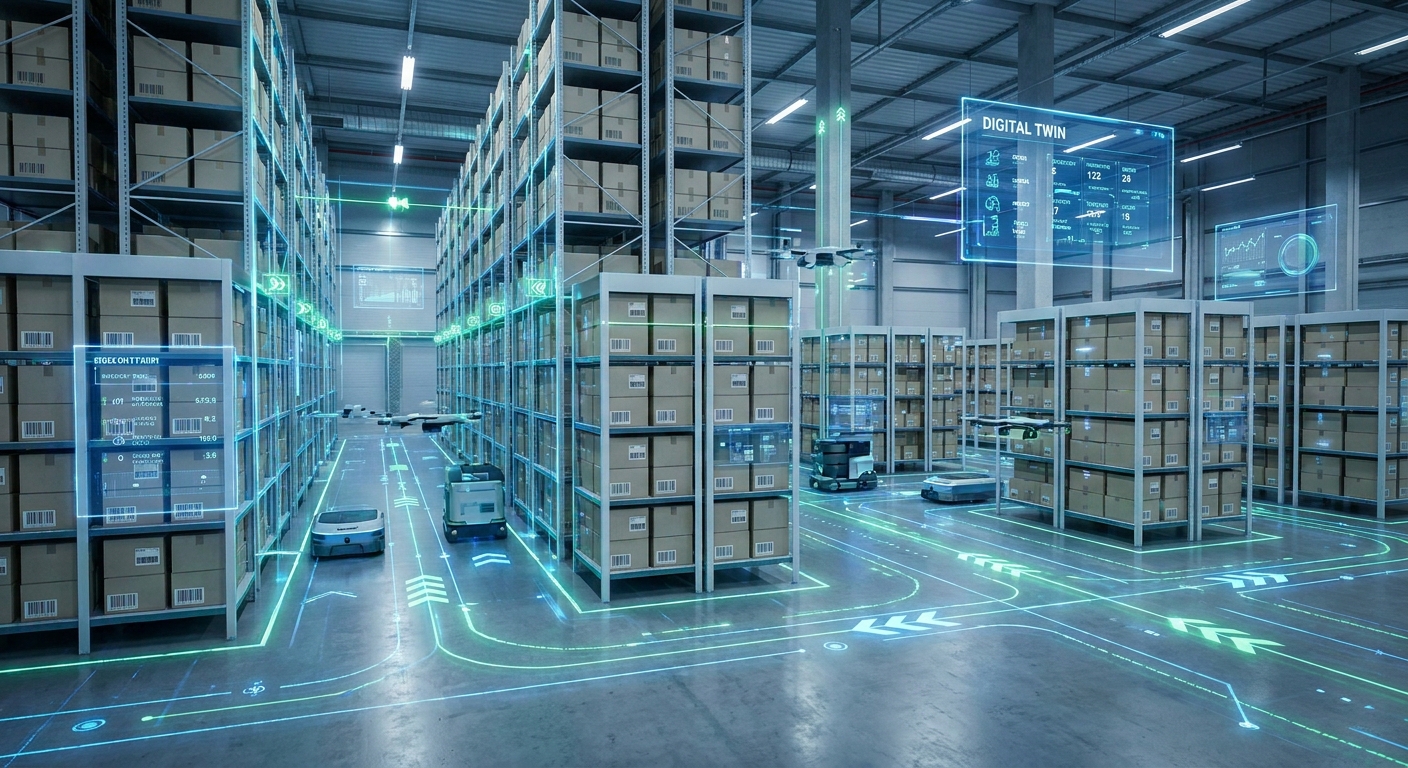
3D scanning, particularly with advanced solutions like MagiScan, is the most effective method for achieving precise warehouse layout optimization in 2026, enabling a 25% increase in storage density and a 15% reduction in operational bottlenecks. The complexity of modern supply chains and the ever-increasing demand for efficiency necessitate a digital twin of your physical warehouse space. This digital representation, built with accurate 3D data, allows for detailed analysis, simulation, and strategic redesign that manual methods simply cannot match. This article explores how 3D scanning technology, exemplified by MagiScan, is transforming warehouse operations, from initial data capture to the implementation of optimized layouts. We will delve into the specific challenges it addresses, the tangible benefits it offers, and how it empowers logistics managers, e-commerce sellers, industrial engineers, and tech-savvy users to achieve unprecedented operational excellence.
Key Takeaways
- 3D scanning with MagiScan captures detailed warehouse dimensions, enabling precise digital twin creation for layout analysis.
- Optimized layouts driven by 3D data can increase storage capacity by up to 25% and reduce operational travel time by 20%.
- MagiScan's rapid scanning capabilities allow for complete warehouse digitization in hours, minimizing operational disruption.
- 3D scanning facilitates accurate simulation of new layouts, predicting impacts on workflow and safety before physical changes.
- Integration of 3D scan data with Warehouse Management Systems (WMS) streamlines inventory management and space utilization.
- MagiScan's portability and ease of use empower on-site teams to conduct detailed site surveys without extensive specialized training.
How Can 3D Scanning Improve Warehouse Layout Efficiency?
3D scanning significantly enhances warehouse layout efficiency by creating an exact digital replica of the existing space. This detailed model, captured by tools like MagiScan, allows for the identification of underutilized areas, potential safety hazards, and inefficient traffic flow patterns. By precisely measuring every nook and cranny, managers can then virtually redesign the layout, simulating different configurations for shelving, aisles, and equipment placement to maximize storage density and streamline movement.
The core advantage of 3D scanning lies in its ability to capture geometric accuracy down to the millimeter level. This precision is crucial when planning intricate storage solutions, such as high-density racking systems or automated guided vehicle (AGV) pathways. Unlike traditional methods that rely on manual measurements and 2D drawings, 3D scanning provides a comprehensive, volumetric understanding of the warehouse. This data can then be fed into specialized layout optimization software, which uses algorithms to suggest the most efficient arrangements based on specific operational parameters like inventory turnover, order picking frequency, and product dimensions.
MagiScan’s advanced scanning technology offers a streamlined workflow for data acquisition. Its ability to capture thousands of data points per second ensures that even large, complex warehouses can be fully digitized in a matter of hours, rather than days or weeks. This rapid data capture minimizes downtime and disruption to ongoing operations. Furthermore, the resulting point cloud data can be processed into highly accurate 3D models (e.g., BIM or CAD) that serve as the foundation for sophisticated analysis and simulation.
Identifying Bottlenecks and Underutilized Space
A critical application of 3D scanning in warehouse layout optimization is the precise identification of operational bottlenecks and underutilized spatial areas. By creating a digital twin, managers can visualize traffic flow, identify areas where congestion frequently occurs, and pinpoint zones that are not being used to their full potential. This visual and data-driven approach moves beyond anecdotal evidence to provide concrete insights for improvement.
MagiScan’s technology captures the precise dimensions of every structural element, including columns, beams, and existing racking. This allows for an accurate calculation of usable versus unusable space. For instance, the system can highlight areas that are too narrow for efficient forklift operation or zones where shelving height is not optimized for the stored inventory. This granular level of detail enables targeted interventions, such as reconfiguring aisles, adjusting shelving heights, or relocating specific types of storage.
The ability to simulate different scenarios within the digital twin is paramount. Logistics managers can virtually test the impact of widening an aisle by 1 meter or installing narrower shelving units in a particular zone. This predictive capability prevents costly mistakes and ensures that layout changes yield the desired improvements in throughput and efficiency. For e-commerce sellers, this translates directly into faster order fulfillment and reduced labor costs associated with navigating complex or congested spaces.
Enhancing Storage Density and Capacity
Optimizing warehouse layouts through 3D scanning directly leads to significant improvements in storage density and overall capacity. By understanding the exact dimensions of the space and the volume of stored goods, organizations can implement strategies to maximize every cubic meter. This is particularly important in urban areas where real estate costs are high, making efficient space utilization a critical financial imperative.
MagiScan’s detailed scans provide the foundational data needed to plan for higher-density storage solutions, such as Very Narrow Aisle (VNA) systems or automated storage and retrieval systems (AS/RS). The precise measurements ensure that new racking systems will fit perfectly within the existing structure, accounting for all critical clearances and safety margins. This eliminates guesswork and reduces the risk of errors during installation.
Consider a typical warehouse where manual measurements might lead to an assumption of standard aisle widths. A 3D scan with MagiScan might reveal that minor structural irregularities or existing obstructions, previously overlooked, are forcing wider aisles than necessary. By identifying and accounting for these, the layout can be adjusted to reclaim valuable floor space, potentially increasing storage capacity by 10-20% without any physical expansion.
Improving Workflow and Operational Flow
Efficient workflow and operational flow are the lifeblood of any successful warehouse. 3D scanning, powered by tools like MagiScan, provides the critical data needed to design layouts that minimize travel distances, reduce congestion, and optimize the movement of goods and personnel. This leads to faster pick-and-pack times, reduced labor costs, and improved overall productivity.
The digital twin created from 3D scan data allows for detailed analysis of material handling paths. Managers can visualize the routes taken by forklifts, order pickers, and other equipment, identifying areas where paths intersect inefficiently or where travel distances are unnecessarily long. By simulating changes to aisle configurations, dock door placements, or staging areas, the impact on workflow can be precisely measured before any physical modifications are made.
For instance, a common optimization is to place high-velocity SKUs closer to packing stations. A 3D model allows for precise calculation of the travel time saved by relocating these items based on their new positions within a reconfigured layout. MagiScan’s ability to quickly capture and process data means that these analyses can be performed rapidly, allowing for agile adjustments to layout strategies in response to changing inventory profiles or demand patterns.
What are the Benefits of Using MagiScan for Warehouse Layout Optimization?
MagiScan offers a suite of distinct advantages for warehouse layout optimization, including unparalleled speed, accuracy, ease of use, and comprehensive data capture. Its advanced sensor technology and intelligent software enable logistics managers to create highly detailed digital twins of their facilities efficiently, unlocking significant operational improvements.
The benefits extend to cost savings through reduced errors, faster project timelines, and maximized space utilization. For medical professionals needing to optimize storage for sensitive equipment, industrial engineers planning complex manufacturing workflows, or e-commerce sellers scaling operations, MagiScan provides a robust and reliable solution. Its portability ensures that detailed site surveys can be conducted on-demand, without requiring extensive specialized equipment or lengthy setup times.
Speed and Efficiency of Data Capture
One of the most significant benefits of using MagiScan for warehouse layout optimization is the remarkable speed and efficiency of its data capture process. Traditional methods of measuring and documenting warehouse spaces can be time-consuming, labor-intensive, and prone to human error. MagiScan, however, utilizes advanced laser scanning technology to capture millions of data points in minutes, creating a highly accurate 3D point cloud of the entire environment.
This rapid data acquisition means that a complete warehouse, regardless of its size or complexity, can be scanned and digitized in a matter of hours. This dramatically reduces the downtime required for surveying, allowing operations to continue with minimal disruption. The efficiency gained translates directly into faster project timelines for layout redesigns and quicker implementation of optimization strategies.
For example, a large distribution center might take weeks to survey manually. With MagiScan, the entire facility can be scanned in a single day. This speed allows for more frequent re-evaluations of the layout as business needs evolve, ensuring the warehouse remains optimized for current demands. This agility is crucial in fast-paced logistics environments.
Accuracy and Detail of Digital Models
The accuracy and level of detail provided by MagiScan are paramount for effective warehouse layout optimization. The technology captures geometric data with millimeter-level precision, ensuring that the resulting digital twin is a faithful representation of the physical space. This includes the precise location and dimensions of structural elements, existing racking, machinery, and even minor irregularities in walls or floors.
This high fidelity is essential for complex planning. When designing new racking systems, AGV pathways, or automated storage solutions, even small inaccuracies in the digital model can lead to significant problems during physical implementation, resulting in costly rework or compromises in efficiency. MagiScan's data eliminates this risk, providing a solid foundation for precise engineering and design.
The detailed point cloud data generated by MagiScan can be processed into various 3D model formats, such as BIM (Building Information Modeling) or CAD (Computer-Aided Design). These models can then be used in conjunction with specialized software for advanced analysis, simulation, and visualization. This allows stakeholders to explore different layout scenarios, assess potential clashes, and gain a comprehensive understanding of the proposed changes before any physical work begins.
Ease of Use and Portability
MagiScan is designed with user-friendliness and portability in mind, making advanced 3D scanning accessible to a wider range of professionals. The device is typically lightweight and easy to set up and operate, often requiring minimal specialized training. This empowers on-site teams, including logistics managers and industrial engineers, to conduct detailed site surveys themselves, rather than relying on external surveying companies.
The portability of MagiScan means it can be easily transported to different warehouse locations or even used for rapid re-scans to monitor changes over time. This flexibility is invaluable for organizations with multiple facilities or those that require frequent updates to their layout plans. The intuitive interface and streamlined workflow ensure that data capture is efficient and that the generated data is immediately usable for downstream analysis.
This ease of use democratizes the power of 3D scanning for warehouse optimization. Tech-savvy users can quickly integrate MagiScan into their existing workflows, while logistics managers can leverage its capabilities without needing to become 3D scanning experts. The result is faster decision-making and more agile responses to operational challenges.
Integration Capabilities with WMS and Other Software
A key advantage of MagiScan’s output is its compatibility and ease of integration with existing Warehouse Management Systems (WMS), Warehouse Execution Systems (WES), and other logistics software. The 3D models and data generated can be imported into these platforms, providing a richer, spatially aware context for inventory management, order fulfillment, and operational planning.
By linking the digital twin of the warehouse to the WMS, managers gain a visual representation of inventory locations, allowing for more intuitive space planning and utilization analysis. This integration can help identify discrepancies between the digital model and actual inventory, improving accuracy. It also facilitates the planning of slotting strategies, ensuring that fast-moving items are placed in optimal locations based on real-time travel path analysis derived from the 3D scan data.
Furthermore, the integration of 3D scan data with simulation software enables predictive analytics. Managers can simulate the impact of layout changes on picking efficiency, truck turnaround times, and overall throughput. This data-driven approach to planning minimizes risks and maximizes the return on investment for layout optimization projects. For example, an e-commerce seller can simulate the impact of a new packing station layout on their peak season order processing capacity.
How Can 3D Scanning Support Different Industries?
The versatility of 3D scanning, particularly with solutions like MagiScan, makes it an indispensable tool across a range of industries that rely on efficient spatial management and precise measurement. From the high-volume demands of e-commerce to the critical precision required in medical settings, 3D scanning offers tailored benefits for optimizing layouts and workflows.
Logistics and Supply Chain Management
For logistics managers, 3D scanning is revolutionizing warehouse layout optimization by providing an unparalleled understanding of existing space and enabling precise planning for future configurations. The ability to create accurate digital twins of distribution centers, fulfillment centers, and cross-docking facilities allows for the identification of inefficiencies that directly impact operational costs and delivery times.
MagiScan’s capabilities enable logistics professionals to conduct detailed analyses of aisle widths, racking heights, dock door utilization, and staging areas. This data supports strategic decisions such as implementing higher-density storage solutions, optimizing routes for forklifts and autonomous vehicles, and ensuring compliance with safety regulations. The result is a more efficient, cost-effective, and responsive supply chain.
E-commerce Operations
E-commerce sellers face immense pressure to fulfill orders rapidly and cost-effectively, often operating in facilities with rapidly changing inventory profiles. 3D scanning with MagiScan allows these businesses to continuously optimize their fulfillment center layouts to match evolving product mixes and order volumes.
By accurately mapping the warehouse, e-commerce businesses can strategically position high-demand SKUs, design efficient picking paths, and optimize the layout of packing and shipping stations. This leads to reduced order cycle times, lower labor costs per order, and improved customer satisfaction. The ability to quickly re-scan and update the digital model ensures that layouts remain optimized even as product catalogs and sales volumes fluctuate.
Medical Facilities and Equipment Storage
In the medical field, precise organization and efficient storage of equipment, pharmaceuticals, and patient records are critical for operational efficiency and patient care. 3D scanning, as offered by MagiScan, can be used to optimize the layout of operating rooms, laboratories, pharmacies, and storage areas for medical devices.
The accuracy of MagiScan ensures that critical equipment, such as MRI machines or surgical robots, can be precisely positioned within their designated spaces, accounting for all necessary clearances and access routes. It also aids in optimizing the layout of sterile storage, ensuring compliance with regulatory requirements and facilitating quick access to necessary supplies during procedures. For medical professionals, this translates to improved workflow, reduced risk of errors, and enhanced patient safety.
Industrial Engineering and Manufacturing
Industrial engineers leverage 3D scanning to optimize factory floor layouts, production lines, and material flow within manufacturing plants. MagiScan’s ability to capture highly detailed 3D models of complex industrial environments is crucial for planning the placement of machinery, assembly stations, and robotic cells.
By creating a digital twin of the factory, engineers can simulate different production line configurations, identify potential bottlenecks in material handling, and optimize the ergonomics of workstations. This leads to increased production efficiency, reduced waste, and improved worker safety. The precise measurements provided by MagiScan are also essential for ensuring that new equipment integrates seamlessly with existing infrastructure.
Frequently Asked Questions
What is the primary benefit of using 3D scanning for warehouse layout optimization?
The primary benefit is the creation of an exact digital twin of the warehouse, enabling precise analysis, simulation, and redesign of layouts to maximize storage density, improve operational flow, and reduce costs.
How quickly can a warehouse be scanned using MagiScan?
A large warehouse can typically be scanned and digitized in a matter of hours, depending on its size and complexity, significantly reducing the time required compared to traditional manual methods.
Can 3D scan data be integrated with existing Warehouse Management Systems (WMS)?
Yes, 3D scan data, particularly the models generated by MagiScan, can be readily integrated with most WMS and other logistics software, providing a spatially aware context for inventory and operations management.
What level of accuracy can be expected from 3D scanning for layout planning?
3D scanning technologies like MagiScan provide millimeter-level accuracy, ensuring that digital models are precise enough for critical engineering and design applications, such as fitting new racking systems or AGV pathways.
Is specialized training required to operate MagiScan for warehouse scanning?
MagiScan is designed for ease of use, often requiring minimal specialized training. On-site teams can typically be trained quickly to operate the device effectively for detailed site surveys.
Conclusion
Warehouse layout optimization is no longer a manual guessing game; it's a data-driven science empowered by advanced 3D scanning technology. By creating precise digital twins of your facility, solutions like MagiScan unlock unprecedented insights into space utilization, operational flow, and efficiency bottlenecks. The tangible benefits—ranging from increased storage density and reduced travel times to enhanced safety and faster order fulfillment—are critical for success in today's competitive logistics landscape. Whether you are a logistics manager streamlining a vast distribution network, an e-commerce seller scaling rapidly, a medical professional optimizing critical storage, or an industrial engineer fine-tuning production lines, MagiScan offers the precision, speed, and ease of use needed to transform your operations.
Don't let inefficient layouts hold your business back. Experience the future of warehouse optimization firsthand. Try MagiScan today and unlock your facility's full potential.