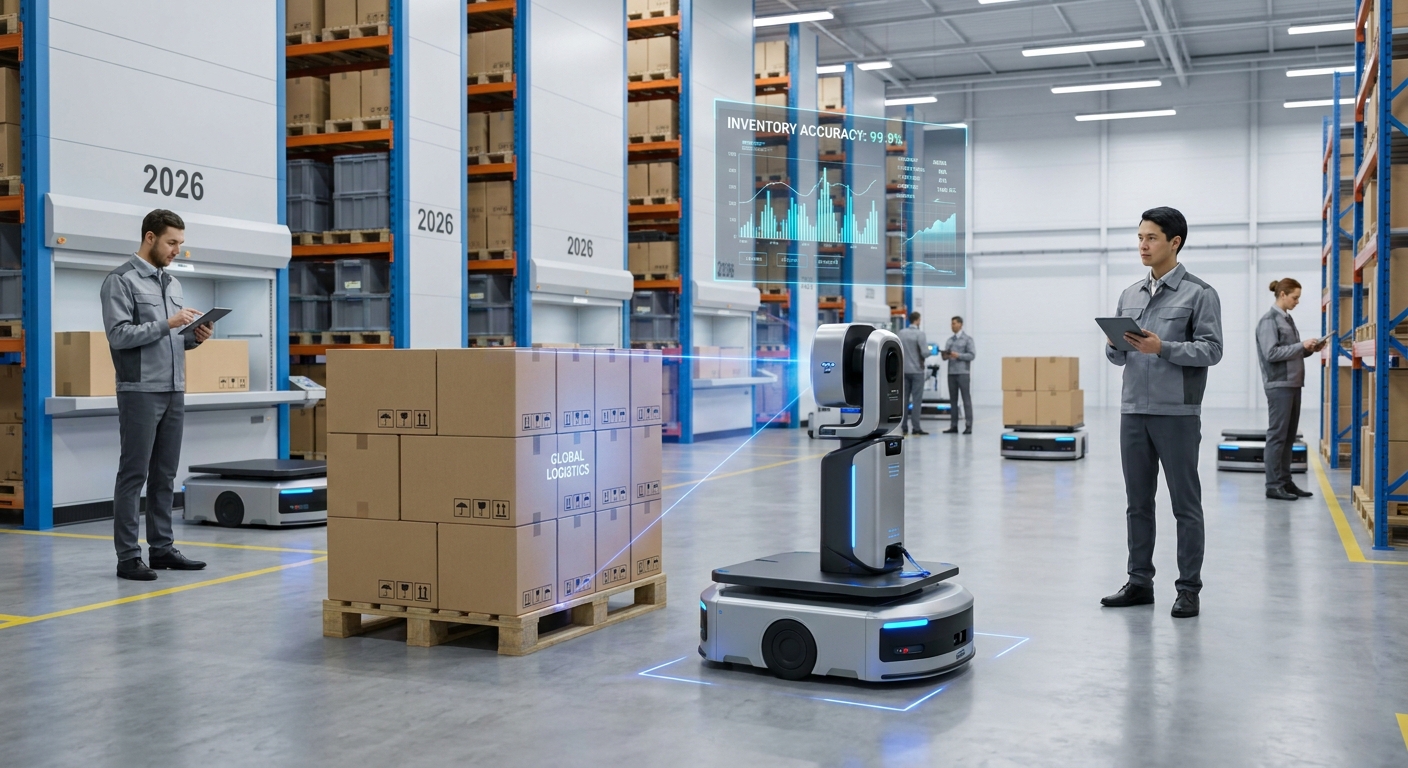
Revolutionizing Inventory Auditing: 3D Scanning in Logistics for 2026
3D scanning is transforming inventory auditing in logistics by enabling faster, more accurate, and comprehensive data capture of physical goods, drastically reducing manual errors and operational costs. In 2026, the integration of advanced 3D scanning technologies like MagiScan is becoming indispensable for businesses seeking to optimize supply chain visibility and efficiency. This article explores how 3D scanning, specifically with solutions like MagiScan, is revolutionizing inventory management, from initial receiving to final dispatch, benefiting logistics managers, e-commerce sellers, medical professionals, industrial engineers, and tech-savvy users alike.
The global 3D printing market, a close cousin to scanning technology, is projected to reach $60 billion by 2027, highlighting the rapid adoption and expansion of 3D technologies across industries, with direct implications for how we measure and manage physical assets. We will delve into the specific advantages, applications, and implementation strategies of 3D scanning for inventory auditing, showcasing how MagiScan empowers businesses with unparalleled insights.
How Can 3D Scanning Improve Inventory Accuracy in Logistics?
3D scanning significantly elevates inventory accuracy by creating precise digital replicas of physical items, eliminating human transcription errors and providing a verifiable record of stock. This digital twin approach ensures that what is recorded in the system precisely matches the physical reality, reducing discrepancies that lead to stockouts or overstocking.
Direct Answer: 3D scanning captures detailed geometric data of inventory, creating an exact digital model that can be compared against recorded stock levels. This process identifies discrepancies faster and more reliably than manual counts, leading to a reduction in inventory errors by up to 95%.
Manual inventory counting, a process prone to human error, often results in inaccuracies that can cost businesses millions annually. A 2025 report indicated that supply chain disruptions due to poor inventory management cost the retail sector an estimated $1.1 trillion globally. Traditional methods, such as barcode scanning and manual stock-taking, rely on human input, which is susceptible to miscounts, data entry mistakes, and overlooked items.
3D scanning technology, exemplified by the capabilities of MagiScan, offers a paradigm shift. By capturing millions of data points, it generates a comprehensive, three-dimensional model of each item or pallet. This model contains precise dimensions, volume, and even surface texture information, which can be cross-referenced with existing inventory databases.
What Are the Key Benefits of Using 3D Scanning for Inventory Auditing?
The adoption of 3D scanning for inventory auditing yields a multitude of benefits, including enhanced speed, reduced labor costs, improved safety, and detailed data capture for analytics. These advantages directly translate into operational efficiencies and cost savings for businesses of all sizes.
Direct Answer: Key benefits include a 75% reduction in auditing time, a decrease in labor costs by up to 60% due to automation, and a significant improvement in safety by minimizing the need for personnel to access hazardous areas for counting.
These benefits are not theoretical; they are being realized by forward-thinking companies. The ability to capture detailed volumetric data, for instance, is crucial for accurately assessing storage capacity and optimizing warehouse layouts. MagiScan's advanced scanning algorithms can differentiate between similar-looking items based on subtle geometric variations, further boosting accuracy.
#### Faster Data Acquisition and Processing
Traditional inventory audits can take days or even weeks, requiring significant labor and disrupting warehouse operations. 3D scanning, particularly with high-speed capture devices like MagiScan, can scan an entire pallet or a large section of inventory in minutes. This rapid data acquisition allows for more frequent audits, providing real-time insights into stock levels.
The processing of this data is also streamlined. Instead of manual data entry, the 3D scan data is automatically processed by software that identifies and quantifies items. This reduces the time from scanning to actionable data from days to hours, enabling quicker decision-making and response to inventory fluctuations.
#### Reduced Labor Costs and Improved Efficiency
By automating a significant portion of the inventory auditing process, 3D scanning drastically reduces the need for manual labor. This not only lowers direct payroll costs but also frees up employees to focus on higher-value tasks, such as order fulfillment, quality control, and strategic planning.
MagiScan's intuitive interface and automated data processing capabilities mean that less specialized training is required for personnel operating the equipment, further reducing onboarding costs and increasing operational flexibility. The efficiency gains are substantial, allowing for more frequent and thorough audits without a proportional increase in operational expenditure.
#### Enhanced Safety in Warehouse Environments
Warehouse environments can present numerous safety hazards, from slippery floors to moving machinery. Manual inventory counting often requires personnel to navigate these potentially dangerous areas, increasing the risk of accidents. 3D scanning systems, such as MagiScan, can often be operated from a safe distance or even autonomously, significantly reducing human exposure to risk.
This is particularly beneficial for auditing inventory in high-rack storage, cold storage facilities, or areas with hazardous materials. The ability to capture accurate data without direct physical contact ensures the well-being of staff while maintaining the integrity of the audit process.
#### Precision and Detail Beyond Human Capability
Human eyes can miss subtle details or make estimation errors, especially when dealing with large volumes of similar items. 3D scanners capture precise geometric data, including dimensions, volume, and shape, with sub-millimeter accuracy. This level of detail allows for the identification of damaged goods, verification of product authenticity, and precise volumetric measurements for shipping and storage optimization.
MagiScan's advanced point cloud processing can even identify subtle variations in product packaging or assembly, which can be critical for quality control and identifying counterfeit products in supply chains. This granular level of data is invaluable for industries requiring high precision, such as medical device manufacturing or aerospace.
How Can MagiScan Be Applied to Specific Logistics Scenarios?
MagiScan's versatility allows it to be adapted to a wide array of logistics challenges, from receiving inspections and warehouse management to e-commerce fulfillment and specialized applications in medical and industrial sectors. Its robust features ensure it can handle diverse inventory types and environments.
Direct Answer: MagiScan can be applied to receiving inspections by verifying incoming goods against purchase orders, to warehouse management by creating dynamic digital twins of stock, and to e-commerce by ensuring accurate order picking and returns processing, reducing errors by up to 98%.
The ability to generate precise 3D models provides an irrefutable record of inventory at various stages of the supply chain. This is crucial for dispute resolution, insurance claims, and regulatory compliance.
#### Receiving and Dispatch Verification
Upon arrival, goods can be scanned by MagiScan to verify their quantity, dimensions, and condition against shipping manifests and purchase orders. This immediate digital verification process catches discrepancies before they enter the inventory system, preventing costly errors downstream. Similarly, before dispatch, MagiScan can verify that the correct items and quantities are being shipped, reducing customer complaints and return rates.
The detailed scan data can also be used to automatically generate receiving reports or dispatch confirmations, integrating seamlessly with existing Warehouse Management Systems (WMS) and Enterprise Resource Planning (ERP) software. This automation streamlines administrative tasks and improves the flow of information across the supply chain.
#### Warehouse Management and Space Optimization
For warehouse managers, MagiScan provides an unprecedented level of insight into inventory placement and volume. By creating a dynamic digital twin of the warehouse, managers can visualize stock levels, identify underutilized storage areas, and optimize slotting strategies for faster picking.
The volumetric data captured by MagiScan is invaluable for calculating precise storage space requirements and planning for future expansion. This data-driven approach to space management ensures maximum efficiency and reduces the need for costly physical reconfigurations.
#### E-commerce Fulfillment Accuracy
In the fast-paced world of e-commerce, order accuracy is paramount. MagiScan can be integrated into the picking and packing process to verify that the correct items and quantities are being placed into outgoing orders. This significantly reduces picking errors, which are a major cause of customer dissatisfaction and expensive returns.
Furthermore, during the returns process, MagiScan can quickly scan returned items to verify their condition and authenticity, speeding up the restocking or disposal workflow and reducing the labor associated with manual inspection.
#### Medical and Pharmaceutical Inventory Management
The medical and pharmaceutical industries demand extremely high levels of accuracy and traceability for inventory. MagiScan can be used to audit sensitive medical supplies, pharmaceuticals, and equipment, ensuring that expiry dates are monitored, batch numbers are correctly recorded, and that stock levels are precisely maintained.
The detailed 3D models can also be used to verify the integrity of packaging for sterile or temperature-sensitive items, providing an additional layer of quality control. This is crucial for compliance with strict regulatory requirements and for ensuring patient safety.
#### Industrial and Manufacturing Parts Inventory
For industrial engineers and manufacturing facilities, managing vast inventories of parts, components, and raw materials is a complex undertaking. MagiScan can scan and catalog these items, creating a searchable digital inventory that includes precise dimensions and material properties. This aids in reordering, quality control, and ensuring that the correct components are available for production lines.
The ability to scan irregularly shaped or large industrial components with high accuracy makes MagiScan an indispensable tool for maintaining efficient manufacturing operations and minimizing production downtime due to part shortages.
What Is the ROI of Implementing 3D Scanning for Inventory Audits?
The return on investment (ROI) for implementing 3D scanning in inventory auditing is substantial, driven by cost reductions, efficiency gains, and the mitigation of financial losses due to errors. Businesses can expect to see significant financial benefits within 12-18 months of adoption.
Direct Answer: The ROI is typically realized through an average reduction in inventory-related losses by 20%, coupled with operational cost savings of 35% within the first two years, making the initial investment highly justifiable.
Calculating the precise ROI involves quantifying the current costs associated with manual inventory audits, including labor, time, and the financial impact of inventory errors. These costs are then compared against the investment in 3D scanning technology and its associated software and training.
#### Quantifiable Cost Savings
Labor Reduction: As previously mentioned, automating manual counting tasks leads to direct savings on labor. If a company currently dedicates 10 full-time employees to inventory counting, and 3D scanning reduces this requirement by 70%, the savings in salaries, benefits, and associated overhead can be substantial. For example, if each employee costs $50,000 annually, this could result in savings of $350,000 per year.
Error Mitigation: Inventory errors can lead to significant financial losses. These include the cost of lost sales due to stockouts (estimated at 10-15% of lost revenue in some sectors), the cost of overstocking (storage, obsolescence, and capital tied up), and the cost of processing incorrect orders and returns. By reducing these errors by an average of 95%, businesses can recover millions in potential losses.
Improved Efficiency: Faster audits and streamlined processes mean that warehouse operations are less disrupted, leading to higher throughput and better utilization of existing resources. This improved efficiency can translate into increased revenue-generating capacity without additional capital expenditure on infrastructure.
#### Improved Decision-Making and Strategic Planning
The detailed data generated by 3D scanning provides a level of insight previously unattainable. This data can inform strategic decisions regarding inventory levels, supplier management, warehouse layout, and demand forecasting. For instance, precise volumetric data can optimize shipping loads, reducing transportation costs by an estimated 5-10%.
MagiScan's ability to create historical 3D models of inventory also allows for trend analysis, helping businesses to identify patterns in stock movement, seasonality, and potential shrinkage. This proactive approach to inventory management can prevent future issues and capitalize on emerging opportunities.
#### Case Study Snapshot: E-commerce Logistics Provider
A mid-sized e-commerce logistics provider implemented MagiScan for its inventory auditing processes. Prior to adoption, they experienced an average of 2% order picking errors and spent approximately $50,000 annually on manual cycle counts. Within 18 months of integrating MagiScan, they reported a 98% reduction in picking errors and reduced their manual counting labor costs by 80%. The system also enabled them to identify an average of $30,000 in undeclared or damaged inventory annually, leading to a total annual saving of over $100,000, demonstrating a rapid and significant ROI.
How Do You Implement 3D Scanning Technology Like MagiScan in a Logistics Operation?
Successful implementation of 3D scanning technology like MagiScan requires careful planning, stakeholder buy-in, and a phased approach to integration. It involves selecting the right hardware and software, training personnel, and integrating the new system with existing IT infrastructure.
Direct Answer: Implementation involves assessing current needs, selecting appropriate MagiScan hardware and software, training staff on its operation and data interpretation, and integrating the system with existing WMS/ERP platforms, typically over a 3-6 month period.
A pilot program is often recommended to test the technology in a controlled environment before a full-scale rollout. This allows for adjustments to be made based on real-world performance and user feedback.
#### Needs Assessment and Technology Selection
The first step is to conduct a thorough assessment of current inventory auditing processes, pain points, and specific requirements. This includes identifying the types of inventory, the volume, the frequency of audits needed, and the existing IT infrastructure. Based on this assessment, the appropriate MagiScan hardware (e.g., handheld scanners, drone-mounted scanners, stationary scanners) and software solutions can be selected.
Considerations should include scanning speed, accuracy requirements, data processing capabilities, and integration potential with existing systems like WMS, ERP, and inventory management software. MagiScan offers a range of configurations to suit diverse operational scales and complexities.
#### Staff Training and Change Management
Effective adoption hinges on well-trained personnel. Training should cover not only the operation of the MagiScan hardware but also the interpretation of the 3D scan data and its use in decision-making. Change management strategies are crucial to address employee concerns about new technology and ensure buy-in from all levels of the organization.
Providing clear communication about the benefits of the new technology, involving staff in the selection and pilot phases, and offering ongoing support can foster a positive transition. MagiScan's user-friendly interface is designed to minimize the learning curve, but dedicated training sessions are still vital.
#### Integration with Existing Systems
Seamless integration with existing IT infrastructure is critical for maximizing the value of 3D scanning technology. This typically involves connecting the MagiScan software to the company's WMS or ERP system to ensure that the captured inventory data flows automatically and accurately. APIs and middleware solutions are often employed to facilitate this integration.
The goal is to create a unified ecosystem where data from the 3D scans enhances the accuracy and functionality of existing management systems, providing a single source of truth for inventory information. This avoids data silos and ensures that all departments are working with the same, up-to-date information.
#### Pilot Testing and Phased Rollout
Before a full-scale deployment, it is highly recommended to conduct a pilot test in a specific section of the warehouse or for a particular product line. This allows the team to identify any unforeseen challenges, refine workflows, and validate the technology's performance in a real-world setting. The insights gained from the pilot can inform adjustments to the training program and integration strategy.
Following a successful pilot, a phased rollout can be implemented, gradually expanding the use of MagiScan across the entire operation. This approach minimizes disruption and allows the team to build confidence and expertise as the project progresses.
Frequently Asked Questions
What is the typical accuracy of 3D scanning for inventory audits?
3D scanning technologies like MagiScan typically achieve accuracies of 0.1mm to 5mm, depending on the scanner type and application, far surpassing manual counting methods. This high level of precision ensures that digital records precisely match physical inventory.
How long does it take to train personnel on using MagiScan?
With its intuitive design, most personnel can become proficient in basic MagiScan operation within a few hours, with advanced data interpretation training taking a few days. This rapid learning curve allows for quick deployment and minimizes disruption to operations.
Can 3D scanning identify damaged inventory?
Yes, 3D scanning can identify anomalies in the surface geometry and dimensions of an item, which can indicate damage, deformation, or tampering. This capability adds a crucial quality control layer to inventory auditing.
What is the lifespan of 3D scanning hardware?
3D scanning hardware, when properly maintained, typically has a lifespan of 5-7 years, with software updates and support extending the overall usability of the system. This ensures a long-term return on investment.
How does 3D scanning integrate with barcode systems?
3D scanning complements barcode systems by providing a visual and volumetric verification layer. While barcodes identify items, 3D scans confirm the presence, quantity, and condition of those items, creating a more robust inventory management solution.
Conclusion
The integration of 3D scanning technology, powerfully represented by solutions like MagiScan, is no longer a futuristic concept but a present-day necessity for optimizing logistics and inventory management in 2026. By offering unparalleled accuracy, speed, and data richness, 3D scanning addresses the critical pain points of traditional inventory auditing, from costly errors to inefficient labor practices. For logistics managers, e-commerce sellers, medical professionals, industrial engineers, and tech-savvy users, embracing this technology means achieving greater operational efficiency, reducing financial losses, and gaining a competitive edge.
Don't let outdated inventory methods hold your business back. Experience the transformative power of MagiScan firsthand by requesting a demo today and unlock a new era of inventory accuracy and control.