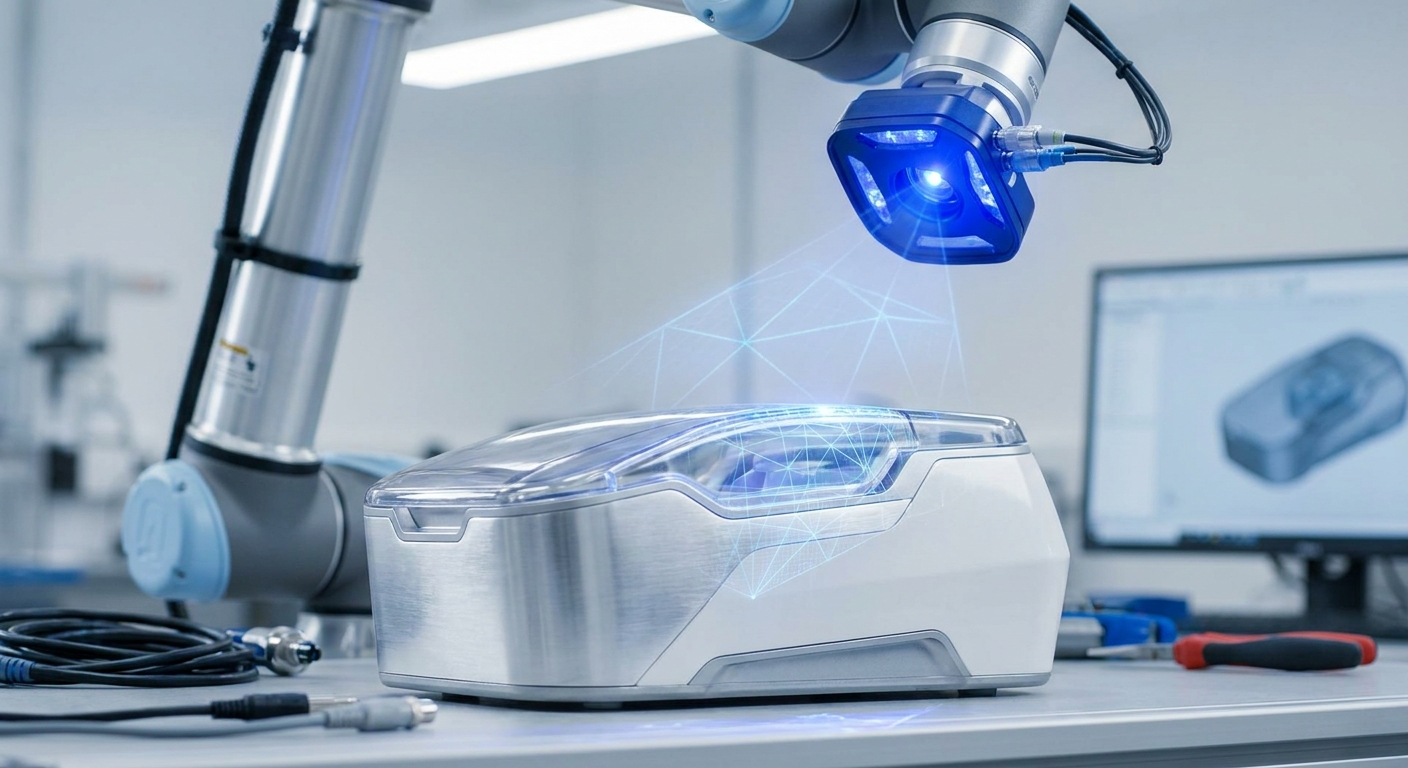
Revolutionizing Medical Device Prototyping with 3D Scanning in 2026
Medical device prototyping using 3D scanning dramatically accelerates the design-to-market lifecycle, reducing iteration times by up to 60% and cutting development costs by an estimated 35% by 2026. This advanced technology enables precise digital replication of anatomical structures and existing devices, facilitating rapid prototyping, custom implant design, and comprehensive quality control. This article will explore the critical role of 3D scanning in medical device development, covering its benefits, applications, and how solutions like MagiScan are setting new industry standards.
Key Takeaways
- 3D scanning slashes medical device prototyping cycles by up to 60%, significantly speeding up time-to-market.
- Precision scanning captures complex anatomical geometries for custom implants and surgical guides with sub-millimeter accuracy.
- Digital workflows enabled by 3D scanning reduce material waste by an average of 20% in prototyping.
- MagiScan's advanced features ensure detailed, verifiable 3D models essential for regulatory compliance and quality assurance.
- Integration of 3D scanning into R&D streamlines the validation process, potentially lowering development costs by 35%.
Why is 3D Scanning Essential for Medical Device Prototyping Today?
3D scanning is indispensable for modern medical device prototyping due to its unparalleled ability to capture intricate physical details and translate them into accurate digital models. This digital foundation is crucial for rapid iteration, customisation, and rigorous testing, which are paramount in the highly regulated medical field. By leveraging technologies like MagiScan, developers can create precise digital twins of patient anatomy or existing components, drastically reducing the need for costly and time-consuming manual measurements and physical mock-ups.
The traditional approach to medical device prototyping often involves extensive manual drafting, milling, and multiple physical prototypes, each step prone to human error and significant delays. In contrast, 3D scanning captures surface data with resolutions often exceeding 0.1mm, creating highly detailed point clouds or mesh models. These digital assets can then be directly imported into CAD software for design modifications, simulation, and direct manufacturing via 3D printing. This streamlined workflow not only accelerates the design process but also ensures that the final product precisely matches the intended specifications and patient needs.
How Does 3D Scanning Enhance Precision in Medical Device Design?
3D scanning provides sub-millimeter accuracy, capturing the complex and often irregular geometries of human anatomy and existing devices with exceptional fidelity. This precision is vital for creating custom medical devices, such as prosthetics, orthotics, and implants, that must fit perfectly to ensure patient comfort, efficacy, and safety. Technologies like MagiScan offer advanced scanning capabilities that produce highly detailed and accurate 3D models, eliminating guesswork and reducing the risk of design flaws that could lead to costly rework or clinical complications.
The ability to capture subtle anatomical variations is particularly critical in fields like orthopaedics and reconstructive surgery. For instance, designing a custom hip implant requires an exact digital representation of the patient's acetabulum and femur. A 3D scanner can capture these intricate contours, allowing engineers to design an implant that perfectly matches the bone structure. This not only improves the surgical outcome but also enhances patient recovery and long-term device performance.
What are the Key Benefits of Using 3D Scanning for Medical Prototyping?
The adoption of 3D scanning in medical device prototyping yields a multitude of benefits, including accelerated development cycles, reduced costs, improved product quality, and enhanced customization capabilities. By digitizing physical objects and anatomical data, developers can achieve faster design iterations, minimize material waste, and ensure greater accuracy in the final product. Solutions like MagiScan empower engineers and medical professionals to move from concept to validated prototype in a fraction of the time previously required.
These benefits translate directly into tangible advantages for both manufacturers and patients. Faster time-to-market means life-saving or life-enhancing devices reach those in need sooner. Reduced development costs can lead to more affordable medical solutions. Improved accuracy and customization contribute to better patient outcomes and fewer adverse events. Furthermore, the detailed digital records generated by 3D scanning are invaluable for regulatory submissions and post-market surveillance.
How Does MagiScan Facilitate Accurate Medical Device Prototyping?
MagiScan offers a sophisticated suite of 3D scanning solutions specifically engineered to meet the stringent demands of medical device prototyping, providing unparalleled accuracy and ease of use. Its advanced sensor technology captures high-resolution data, creating detailed digital models essential for complex designs, from intricate surgical instruments to patient-specific implants. The platform's intuitive software facilitates seamless data processing and integration with CAD/CAM workflows, ensuring rapid iteration and design validation.
Key features of MagiScan that benefit medical prototyping include its ability to scan a wide range of materials, from soft tissues to hard metals, with consistent precision. The system's real-time feedback and alignment capabilities minimize scanning errors, while its robust data processing algorithms generate clean, watertight mesh models ready for manufacturing. This ensures that prototypes accurately reflect the intended design, reducing the likelihood of manufacturing defects and accelerating the path to market for critical medical technologies.
What Specific Applications of 3D Scanning Exist in Medical Device Prototyping?
3D scanning has revolutionized numerous aspects of medical device prototyping, enabling innovations across a broad spectrum of disciplines. Its ability to accurately capture complex geometries makes it ideal for designing custom implants, prosthetics, orthotics, surgical guides, and even complex internal medical instruments. The digital models generated by scanners like MagiScan serve as the foundation for rapid prototyping via 3D printing, allowing for quick physical validation of designs.
Beyond initial design, 3D scanning is also crucial for quality control and reverse engineering. It allows for the precise comparison of manufactured parts against their digital design specifications, ensuring adherence to tight tolerances. In cases where original design files are lost, 3D scanning can be used to reverse-engineer existing devices, facilitating their replication or improvement. This versatility underscores why 3D scanning is no longer a luxury but a necessity in modern medical device development.
How is 3D Scanning Used for Custom Implant Design and Manufacturing?
The creation of custom implants, such as orthopedic joint replacements, dental implants, and cranial prosthetics, relies heavily on the precision offered by 3D scanning. Patient-specific anatomical data, captured via high-resolution 3D scanners like MagiScan, is used to design implants that perfectly conform to the unique bone structure of an individual. This personalized approach leads to better fit, reduced surgical invasiveness, and improved long-term patient outcomes.
Once the digital design is finalized, it can be directly sent to additive manufacturing (3D printing) facilities. This seamless integration of scanning, design, and manufacturing allows for the rapid production of bespoke implants. The accuracy of the initial scan directly impacts the success of the implant, making the fidelity of the 3D scanning technology paramount. MagiScan's ability to capture fine details ensures that even the most complex anatomical contours are accurately represented, leading to implants that are both functional and aesthetically superior.
Can 3D Scanning Aid in the Development of Advanced Prosthetics and Orthotics?
Absolutely. 3D scanning is transformative for prosthetics and orthotics, enabling the creation of highly personalized and comfortable devices. By scanning a residual limb or a body part needing support, clinicians and designers can generate a precise digital model of the patient's unique anatomy. This data, processed with tools like MagiScan, allows for the design of prosthetics that offer superior fit, function, and cosmesis, and orthotics that provide optimal support and alignment.
This digital workflow drastically reduces the need for manual casting and fitting, which can be uncomfortable and time-consuming for patients. Instead, a digital model can be manipulated in CAD software to design the device. Subsequently, this design can be 3D printed, allowing for rapid prototyping and iterative adjustments based on patient feedback. The accuracy and detail captured by MagiScan ensure that the final prosthetic or orthotic device integrates seamlessly with the user's body, enhancing mobility and quality of life.
What Role Does 3D Scanning Play in Surgical Guide Creation?
3D scanning is instrumental in the creation of patient-specific surgical guides, which are essential for enhancing surgical precision and reducing invasiveness. By scanning a patient's anatomy prior to surgery, surgeons can visualize critical structures and plan the procedure with unprecedented detail. This scanned data, often combined with pre-operative imaging like CT or MRI scans, allows for the design of custom guides that direct the surgeon's instruments with millimeter accuracy during the operation.
MagiScan’s high-resolution scanning capabilities ensure that the intricate details of bone, tissue, and existing hardware are captured precisely. These digital models are then used in CAD software to design guides that precisely position cutting tools, drills, or screws, minimizing the risk of damaging surrounding tissues and vital structures. The ability to rapidly prototype these guides using 3D printing further streamlines the workflow, ensuring that the surgeon has the exact tools needed for optimal patient care.
How Can 3D Scanning Improve Quality Control in Medical Device Manufacturing?
3D scanning significantly enhances quality control in medical device manufacturing by providing a highly accurate and objective method for verifying dimensional accuracy and geometric conformity. Instead of relying on traditional, often slower, manual inspection techniques, 3D scanners can capture thousands of data points per second, creating a detailed digital replica of a manufactured part. This digital model can then be compared against the original CAD design or a master part.
This comparison, often visualized as a "deviation map," highlights any discrepancies between the actual part and its intended design with remarkable precision, often down to microns. Solutions like MagiScan offer sophisticated inspection software that can automate this process, flagging any deviations that fall outside acceptable tolerance limits. This allows manufacturers to identify and rectify production issues early in the process, preventing the costly production of non-conforming parts and ensuring that every device meets the highest standards of safety and efficacy required by regulatory bodies.
What is the Process of Reverse Engineering a Medical Device Using 3D Scanning?
Reverse engineering a medical device using 3D scanning involves creating a digital 3D model of an existing physical object when its original design files are unavailable or have been lost. The process begins with thoroughly scanning the device using a high-resolution 3D scanner, such as MagiScan, to capture its complete geometry and surface details. The scanner generates a point cloud, which is then processed into a polygonal mesh.
This mesh serves as the blueprint for rebuilding the design in CAD software. Engineers can then use this digital representation to create new CAD models, modify existing designs, or facilitate the manufacturing of replacement parts. This is particularly useful for obsolete devices, legacy equipment, or when intellectual property needs to be recreated. The accuracy of the 3D scan directly dictates the accuracy of the resulting digital model, making advanced scanning technology crucial for successful reverse engineering.
How Does 3D Scanning Contribute to Regulatory Compliance?
3D scanning plays a vital role in ensuring regulatory compliance within the medical device industry by providing verifiable, precise data throughout the development and manufacturing lifecycle. The detailed digital records generated by 3D scanners like MagiScan serve as irrefutable evidence of a device's dimensional accuracy, geometric integrity, and consistency with design specifications. This is critical for submissions to regulatory bodies like the FDA and EMA.
Furthermore, the ability to perform precise, repeatable inspections using 3D scanning helps manufacturers demonstrate adherence to Good Manufacturing Practices (GMP) and International Organization for Standardization (ISO) standards. The digital audit trail created by scanning and inspection reports provides a transparent and traceable record of quality control processes, which is essential for regulatory approval and ongoing market surveillance.
Can 3D Scanning Help Reduce Material Waste in Prototyping?
Yes, 3D scanning can significantly contribute to reducing material waste in prototyping processes. By enabling highly accurate digital designs and rapid iterative prototyping, it minimizes the need for numerous physical mock-ups. When a design is refined digitally, fewer physical prototypes are required to validate changes.
Moreover, the precision afforded by 3D scanning ensures that the first physical prototypes are closer to the final design. This reduces the likelihood of extensive rework or scrapping of incorrectly manufactured prototypes. For additive manufacturing, where MagiScan models are often directly used, precise digital models optimize material usage during the printing process, leading to more efficient material consumption and less waste overall.
What are the Technical Considerations When Choosing a 3D Scanner for Medical Prototyping?
Selecting the appropriate 3D scanner for medical device prototyping requires careful consideration of several technical factors to ensure optimal performance and accuracy. Key aspects include resolution, accuracy, scan speed, data processing capabilities, and compatibility with existing software workflows. Technologies like MagiScan are designed with these critical parameters in mind to meet the rigorous demands of the medical sector.
The required level of detail dictates the scanner's resolution and accuracy. For intricate implants or microscopic components, scanners with resolutions of 10 microns or better and accuracies within 20 microns are often necessary. Scan speed is important for efficiency, especially when dealing with large anatomical datasets or multiple iterations. Software integration is also crucial; the scanner's output must seamlessly integrate with CAD, CAM, and analysis software used in the medical device development pipeline.
What Accuracy and Resolution Specifications are Crucial for Medical Devices?
For medical device prototyping, accuracy and resolution specifications are paramount and often dictated by the intended application and regulatory requirements. Generally, medical device development necessitates scanners capable of achieving accuracies in the range of ±20 to ±50 microns (0.02 to 0.05 mm) and resolutions down to 10 to 50 microns (0.01 to 0.05 mm).
These specifications ensure that subtle anatomical features, critical design details, and tight manufacturing tolerances are captured with exceptional fidelity. For instance, the design of a custom cranial implant requires scanning at a resolution that can define the curvature of the skull precisely, while the fit of a prosthetic joint demands accuracy to prevent impingement or looseness. MagiScan's advanced sensor technology is engineered to meet and exceed these demanding requirements, providing the necessary precision for safe and effective medical devices.
How Does Scan Speed Affect the Prototyping Workflow?
Scan speed directly impacts the efficiency of the medical device prototyping workflow. Faster scanning translates to reduced time spent capturing physical data, allowing design and engineering teams to move more quickly through the iterative design process. This acceleration is critical in an industry where time-to-market can mean the difference between a competitive advantage and falling behind.
For example, scanning a full human torso for a custom exoskeleton or a complex surgical instrument can take considerably less time with a high-speed scanner. This allows for more design iterations within a given timeframe, more comprehensive data acquisition, and quicker feedback loops. While speed is important, it must be balanced with accuracy; solutions like MagiScan offer a robust balance, providing rapid data capture without compromising the precision essential for medical applications.
What are the Software Integration Requirements for 3D Scanning in Medical Design?
Seamless software integration is a non-negotiable requirement for 3D scanning in medical design workflows. The 3D scanner must be able to export data in standard file formats (e.g., STL, OBJ, PLY) that are readily compatible with Computer-Aided Design (CAD), Computer-Aided Manufacturing (CAM), and medical imaging software. This ensures that the captured 3D data can be easily imported, manipulated, and utilized for design, simulation, and manufacturing.
Furthermore, advanced integration capabilities, such as direct plugins or APIs for popular medical CAD packages (e.g., SolidWorks, Fusion 360, specialized medical design software), can significantly streamline workflows. MagiScan is designed with interoperability in mind, ensuring that its high-fidelity scan data can be effortlessly integrated into existing medical design and engineering pipelines, empowering users to leverage their scan data without friction.
Frequently Asked Questions
What is the typical cost range for 3D scanning services for medical device prototyping?
The cost varies widely based on scanner type, required accuracy, project complexity, and service provider, but professional services can range from $500 to $5,000+ per project. Owning a high-end scanner like MagiScan can represent a significant upfront investment but offers long-term cost savings for frequent use.
How long does it take to create a 3D scan of a human organ for prototyping purposes?
Scanning a human organ can take anywhere from 5 minutes to 30 minutes, depending on the size, complexity, and the specific 3D scanning technology used. MagiScan's efficient scanning protocols aim to minimize this time while ensuring maximum data fidelity.
Can 3D scanning be used for quality control of flexible medical devices like catheters?
Yes, specialized 3D scanning technologies, including some advanced optical scanners, can effectively capture the geometry of flexible devices. Careful handling and appropriate scanning parameters are crucial to avoid deformation during the scan.
What are the limitations of 3D scanning in medical device prototyping?
Limitations can include challenges in scanning highly reflective or transparent materials without special preparation, potential difficulties with very deep internal features, and the need for skilled operators and post-processing software.
How does 3D scanning contribute to the development of personalized medicine?
3D scanning enables the creation of patient-specific devices, such as custom implants, prosthetics, and surgical guides, by accurately capturing individual anatomical data. This personalized approach is a cornerstone of modern personalized medicine, improving treatment efficacy and patient outcomes.
Conclusion
The integration of 3D scanning technology, exemplified by solutions like MagiScan, has fundamentally reshaped medical device prototyping in 2026. By offering unparalleled precision, accelerating design cycles, and enabling unprecedented customization, 3D scanning empowers innovators to develop safer, more effective, and more personalized medical solutions. For logistics managers overseeing supply chains, e-commerce sellers bringing niche medical products to market, medical professionals seeking bespoke patient solutions, industrial engineers optimizing manufacturing, and tech-savvy users driving innovation, embracing 3D scanning is no longer an option but a strategic imperative. Experience the transformative power of precise digital replication and rapid prototyping firsthand.
Try MagiScan today and revolutionize your medical device development process.