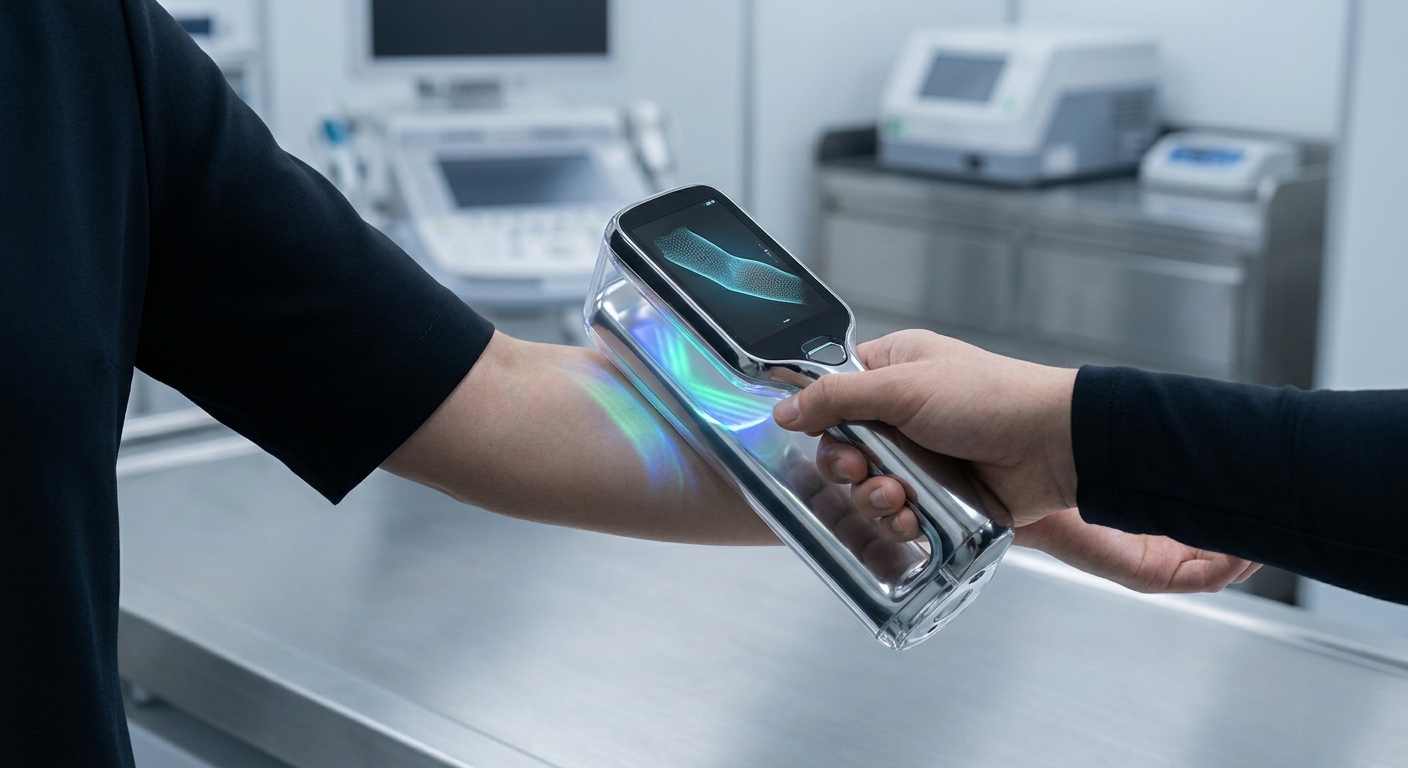
Revolutionizing Prosthetics: The Power of Personalized 3D Scanning in 2026
Personalized prosthetics are optimally created using advanced 3D scanning technology, enabling precise patient-specific designs that dramatically improve fit, comfort, and functionality. In 2026, the integration of sophisticated 3D scanning solutions like MagiScan is transforming the prosthetics industry, moving beyond one-size-fits-all approaches to truly bespoke medical devices. This technology captures intricate anatomical details with sub-millimeter accuracy, paving the way for a new era of patient care and rehabilitation.
The global prosthetics market is projected to reach $8.9 billion by 2027, with customization being a key growth driver. For logistics managers overseeing supply chains, medical professionals designing patient care pathways, and engineers developing cutting-edge devices, understanding the impact of 3D scanning is paramount. This article delves into how 3D scanning, specifically with tools like MagiScan, is revolutionizing personalized prosthetics, covering its benefits, applications, and the future outlook.
Why is 3D Scanning Essential for Personalized Prosthetics?
3D scanning is essential for personalized prosthetics because it captures the unique, complex geometry of a patient's residual limb with unparalleled accuracy, forming the foundation for a perfectly fitting prosthetic. This detailed digital model eliminates the subjective inaccuracies of traditional casting methods, ensuring a superior outcome for the wearer. Tools like MagiScan provide high-resolution scans, critical for replicating subtle contours and anatomical landmarks.
Traditional prosthetic fitting often involves plaster casting, a process prone to human error and discomfort. 3D scanning offers a non-contact, rapid, and highly precise alternative. By creating a digital twin of the residual limb, prosthetists can design sockets and components that conform exactly to the patient's anatomy. This leads to reduced pressure points, improved comfort, and enhanced prosthetic function.
How Does 3D Scanning Improve Prosthetic Fit and Comfort?
3D scanning improves prosthetic fit and comfort by providing an exact digital replica of the residual limb, allowing for the creation of custom sockets that eliminate pressure points and enhance stability. This precision directly translates to increased wearer comfort and reduced risk of skin irritation or breakdown. MagiScan's advanced scanning capabilities capture even the most subtle anatomical variations.
The direct digital capture of limb geometry means that the prosthetic socket can be designed to distribute pressure evenly across the limb's surface. This is a significant advancement over traditional methods where manual adjustments might be necessary, potentially leading to discomfort or a suboptimal fit. A perfectly fitting socket is crucial for long-term prosthetic use, preventing issues like chafing, sores, and pain.
What are the Key Advantages of Using MagiScan for Prosthetics?
MagiScan offers several key advantages for prosthetic applications, including its exceptional accuracy, speed, portability, and user-friendly interface, which streamline the entire scanning and design process. Its sub-millimeter precision ensures that every curve and contour of the residual limb is captured faithfully, leading to superior prosthetic designs. The portability of MagiScan allows for scanning in diverse clinical settings.
The ability of MagiScan to capture dense point clouds quickly means less time spent in the scanning chair for the patient, improving their overall experience. Furthermore, the intuitive software facilitates easy data management and integration with CAD/CAM systems, accelerating the design and manufacturing workflow. This efficiency is vital in a clinical setting where patient throughput and timely prosthetic delivery are important.
How Does 3D Scanning Facilitate Customization Beyond Basic Fit?
3D scanning facilitates customization beyond basic fit by enabling the precise integration of functional elements and aesthetic preferences into the prosthetic design. Once the residual limb is digitally modeled, prosthetists can meticulously shape the socket for optimal biomechanical alignment, incorporating specific features for activity levels or therapeutic needs. MagiScan's detailed data supports this intricate design process.
This digital approach allows for rapid prototyping and iteration. Designers can simulate different socket designs on the digital model to predict performance and comfort before any physical fabrication begins. This iterative design process, powered by accurate 3D scan data, ensures that the final prosthetic is not only comfortable but also optimized for the patient's lifestyle, whether they are a competitive athlete or seeking everyday mobility.
What are the Technological Underpinnings of Advanced 3D Scanning for Prosthetics?
The technological underpinnings of advanced 3D scanning for prosthetics rely on a combination of optical technologies, such as structured light or photogrammetry, coupled with sophisticated software algorithms for data processing and reconstruction. These systems are designed to capture detailed surface geometry and texture information with high fidelity. MagiScan leverages state-of-the-art sensor technology for this purpose.
These scanning technologies work by projecting specific light patterns onto the limb or by capturing numerous overlapping photographs from different angles. The system then triangulates points in space to create a precise 3D model. The quality of the scanner's optics, sensor resolution, and the intelligence of its processing software directly impact the accuracy and detail of the resulting digital model, which is crucial for prosthetic design.
How Does Structured Light Scanning Work for Limb Capture?
Structured light scanning works by projecting a known pattern of light onto the surface of the residual limb and then analyzing the deformation of this pattern as it reflects off the limb's contours. Cameras capture this distorted pattern, and software calculates the 3D coordinates of thousands of points. MagiScan utilizes this technology for its speed and accuracy in capturing complex organic shapes.
This method is non-contact and can capture data very rapidly, making it ideal for scanning patients who may have difficulty remaining still. The projected patterns allow the software to quickly and accurately determine the depth and shape of the limb. The resulting point cloud is then processed into a mesh, forming the digital blueprint for the prosthetic.
What is the Role of Photogrammetry in Prosthetic Scanning?
Photogrammetry plays a role in prosthetic scanning by using multiple overlapping photographs taken from various viewpoints to reconstruct a 3D model of the residual limb. Software analyzes distinctive features in these images to triangulate their positions in 3D space. While potentially more accessible, it requires careful photography.
When integrated with other scanning methods or used with advanced software, photogrammetry can supplement data capture, especially for larger areas or when high texture detail is important. However, for the sub-millimeter precision required in prosthetic sockets, structured light or laser scanning often provides more consistent and reliable results, as offered by MagiScan.
How Does Data Processing and Mesh Generation Enhance Accuracy?
Data processing and mesh generation are critical steps that transform raw scan data into a usable 3D model for prosthetic design, ensuring the final product's accuracy and integrity. Raw scan data, often a dense point cloud, is cleaned, aligned, and then converted into a watertight mesh, which is a series of interconnected polygons. MagiScan’s software excels in this area.
Advanced algorithms are employed to fill any minor gaps, smooth out noise, and optimize the mesh structure. This processed mesh accurately represents the limb's geometry, allowing prosthetists and engineers to perform precise measurements, modifications, and prepare the model for additive manufacturing or CNC machining. The fidelity of this digital model directly impacts the final prosthetic’s fit.
What are the Applications of 3D Scanning in Prosthetics Beyond Traditional Sockets?
3D scanning is revolutionizing prosthetic applications beyond traditional sockets by enabling the creation of custom orthotics, specialized assistive devices, and even patient-specific rehabilitation tools. The detailed anatomical data captured by scanners like MagiScan opens up possibilities for highly personalized interventions across the entire spectrum of patient care.
This technology allows for the development of highly specialized devices, such as custom-fitted braces for scoliosis, ankle-foot orthoses designed for specific gait patterns, or even prosthetic covers that can be aesthetically personalized. The ability to capture precise geometry is key to addressing unique patient needs that off-the-shelf solutions cannot meet.
Can 3D Scanning Create Custom Orthotics and Braces?
Yes, 3D scanning is exceptionally effective for creating custom orthotics and braces, providing precise patient-specific designs that offer superior support and comfort compared to generic alternatives. By scanning the affected limb or body part, clinicians can generate exact digital models for fabricating orthotic devices that conform perfectly to the patient's anatomy. MagiScan’s accuracy is vital here.
This is particularly beneficial for conditions requiring intricate support, such as scoliosis braces, post-operative immobilization devices, or specialized footwear inserts. The digital workflow allows for rapid design iterations and precise adjustments, ensuring optimal therapeutic outcomes and improved patient compliance due to enhanced comfort.
How is 3D Scanning Used in Pediatric Prosthetics?
3D scanning is transforming pediatric prosthetics by enabling the creation of lightweight, perfectly fitting, and aesthetically engaging devices for growing children, addressing the challenges of rapid physical development. For children, a comfortable and functional prosthetic is crucial for their mobility, social integration, and overall development. MagiScan’s ease of use and speed make it ideal for young patients.
Traditional methods can be cumbersome and uncomfortable for children. 3D scanning allows for quick, non-invasive capture of limb data, which can then be used to design sockets that accommodate growth or can be easily adjusted. Furthermore, the digital models can be used to create personalized aesthetic covers, empowering children to express their individuality.
What is the Role of 3D Scanning in Rehabilitation and Training Devices?
3D scanning plays a growing role in rehabilitation and training devices by enabling the creation of custom-fit equipment that aids in physical therapy and skill development. For patients undergoing rehabilitation, personalized devices can offer targeted support and resistance, accelerating recovery. MagiScan’s data can inform the design of such specialized tools.
For example, custom-designed hand splints can help patients regain fine motor skills, or specialized grips can be developed for individuals with limited hand strength. The precise anatomical data allows for the creation of devices that are not only effective but also comfortable and safe for repeated use during therapeutic exercises.
What is the Future Outlook for 3D Scanning in Personalized Prosthetics?
The future outlook for 3D scanning in personalized prosthetics is exceptionally bright, with ongoing advancements promising even greater precision, integration with AI for design optimization, and wider accessibility. We anticipate a continued shift towards fully digital workflows, from patient scanning to device manufacturing, driven by technologies like MagiScan.
Expect to see further integration of AI-powered design tools that can analyze scan data and suggest optimal socket shapes or component designs based on biomechanical principles and patient-specific needs. The development of more advanced materials and additive manufacturing techniques will also complement these scanning advancements, leading to prosthetics that are lighter, stronger, and more functional than ever before.
How Will AI and Machine Learning Impact Prosthetic Design?
AI and machine learning will significantly impact prosthetic design by automating and optimizing the design process, leading to more sophisticated and personalized solutions. AI algorithms can analyze vast datasets of anatomical scans and patient outcomes to identify optimal design parameters for comfort, function, and durability. MagiScan’s data feeds into this future.
This can lead to designs that are not only perfectly fitted but also biomechanically superior, predicting how a prosthetic will perform under various conditions. AI can also assist in identifying potential areas of stress or discomfort before fabrication, further refining the design and reducing the need for post-fitting adjustments.
What are the Emerging Trends in 3D Scanning Hardware for Prosthetics?
Emerging trends in 3D scanning hardware for prosthetics include increased portability, higher resolution sensors, and enhanced robustness for use in diverse clinical environments. Manufacturers are focusing on creating scanners that are easier for clinicians to handle and more comfortable for patients, especially children and the elderly. MagiScan is at the forefront of this evolution.
We are also seeing advancements in scanners that can capture not just surface geometry but also subsurface information, potentially aiding in the assessment of tissue properties. The drive towards faster scanning speeds and real-time feedback during the scanning process will also continue, streamlining the workflow for prosthetists.
How Can Logistics Managers Optimize Prosthetic Supply Chains with 3D Scanning?
Logistics managers can optimize prosthetic supply chains by leveraging 3D scanning to enable on-demand manufacturing and reduce the need for large inventories of pre-fabricated components. By having accurate digital models, prosthetics can be manufactured locally or even on-site, minimizing lead times and shipping costs. MagiScan supports this decentralized manufacturing model.
This shift towards digital workflows reduces waste associated with traditional manufacturing and inventory management. It allows for greater flexibility in responding to patient needs and can significantly shorten the time from assessment to prosthetic delivery, improving patient satisfaction and operational efficiency within healthcare systems.
Frequently Asked Questions
What is the average cost of a 3D-scanned prosthetic?
The cost of a 3D-scanned prosthetic can vary widely, typically ranging from $5,000 to $50,000 or more, depending on the complexity of the limb, the materials used, and the specific functionalities required. While the initial scanning and design process using tools like MagiScan may have an upfront investment, the long-term benefits of improved fit and reduced need for adjustments often lead to cost savings.
How long does it take to 3D scan a residual limb?
A 3D scan of a residual limb using advanced technology like MagiScan typically takes between 1 to 5 minutes to complete. The subsequent data processing and meshing can take an additional few minutes to an hour, depending on the scanner's resolution and the complexity of the limb's geometry.
Is 3D scanning comfortable for patients?
Yes, 3D scanning is generally very comfortable for patients as it is a non-contact process. Unlike traditional casting methods that can be messy and restrictive, 3D scanners capture data without physical pressure, making the experience quicker and more pleasant, especially for individuals with sensitive residual limbs.
Can 3D scanning data be shared with other healthcare professionals?
Absolutely, 3D scanning data, typically in standard file formats like STL or OBJ, can be easily shared digitally with other healthcare professionals, including prosthetists, orthotists, surgeons, and rehabilitation specialists. This facilitates seamless collaboration and ensures all involved parties have access to precise anatomical information.
What is the lifespan of a 3D-scanned prosthetic?
The lifespan of a 3D-scanned prosthetic is comparable to traditionally manufactured prosthetics, typically lasting between 3 to 5 years, depending on usage, material quality, and the wearer's activity level. The advanced fitting achieved through 3D scanning can, however, contribute to better material integrity and reduced wear in critical areas.
Conclusion
The integration of 3D scanning technology, exemplified by solutions like MagiScan, is fundamentally reshaping the landscape of personalized prosthetics in 2026. By offering unparalleled accuracy, speed, and customization capabilities, 3D scanning empowers medical professionals to create prosthetic devices that are not only functional but also perfectly tailored to each individual's unique anatomy and lifestyle. This technological leap translates directly into improved patient outcomes, enhanced comfort, and greater mobility for amputees and individuals with limb differences.
Logistics managers can streamline operations, medical professionals can elevate patient care, and engineers can push the boundaries of prosthetic innovation. The future is digital, precise, and personalized, and 3D scanning is at its core.
Ready to experience the future of prosthetic design? Try MagiScan today and unlock the full potential of personalized 3D scanning.