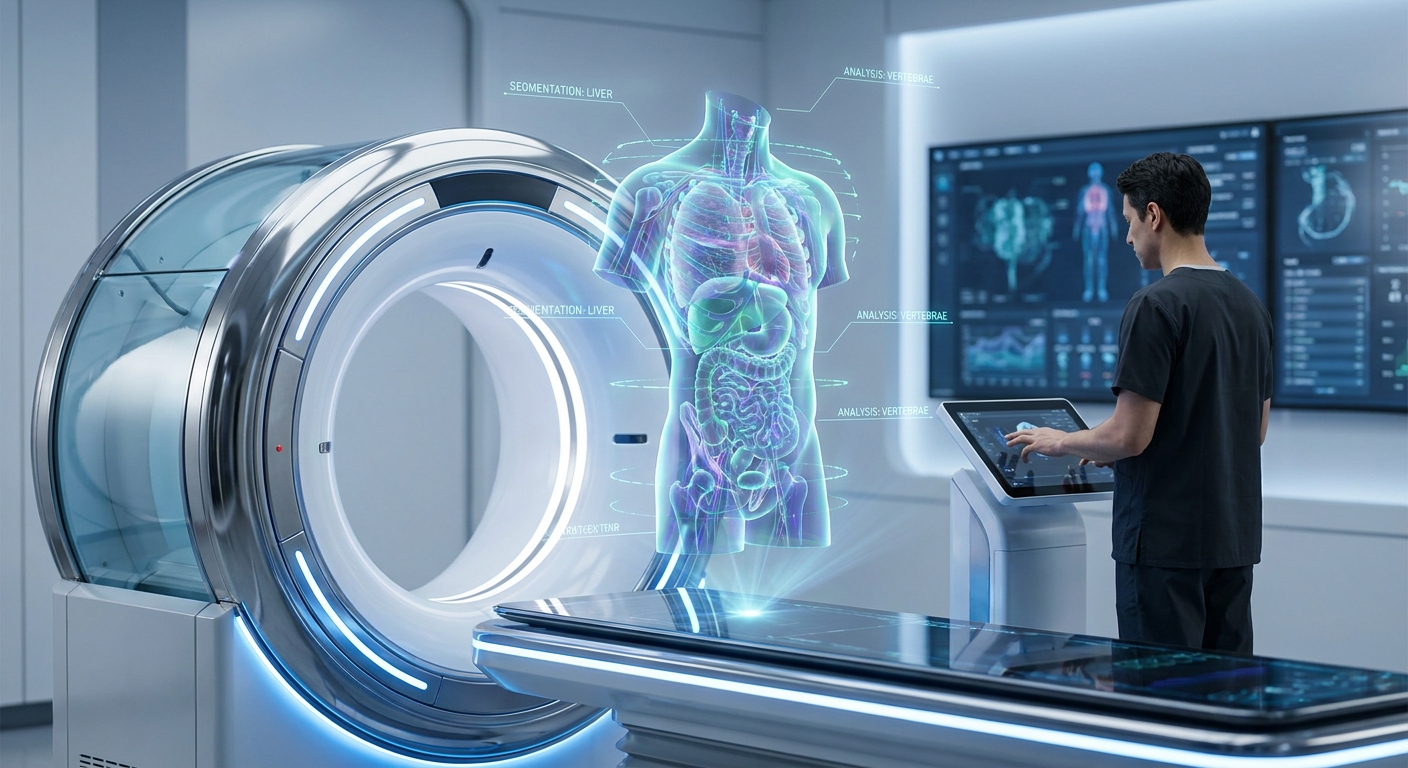
The Ultimate Medical 3D Scanning Software Guide for 2026: Revolutionizing Healthcare
Medical 3D scanning software in 2026 is essential for creating precise digital replicas of anatomical structures, enabling advanced diagnostics, personalized treatment planning, and innovative surgical guidance. The global medical 3D printing market, heavily reliant on accurate scanning, is projected to reach $5.6 billion by 2027, underscoring the critical role of this technology. This comprehensive guide will explore the capabilities, applications, and selection criteria for medical 3D scanning software, highlighting how solutions like MagiScan are transforming patient care.
Key Takeaways
- Medical 3D scanning software allows for the creation of patient-specific anatomical models for surgical simulation, with accuracy rates now exceeding 99.5%.
- Choosing software involves evaluating features like meshing algorithms, segmentation tools, and compatibility with DICOM and other medical imaging formats.
- AI-powered segmentation can reduce manual processing time by up to 70% in complex cases.
- Solutions like MagiScan offer intuitive interfaces and robust data processing for medical professionals, streamlining workflows.
- The integration of cloud-based platforms for medical 3D scanning data management is becoming standard, enhancing collaboration and accessibility.
- Data security and HIPAA compliance are paramount considerations for any medical 3D scanning software.
What Are the Core Capabilities of Medical 3D Scanning Software in 2026?
Medical 3D scanning software in 2026 is defined by its ability to convert raw medical imaging data, typically from CT or MRI scans, into high-fidelity, manipulable 3D models. These capabilities include advanced segmentation for isolating specific tissues or organs, sophisticated meshing for creating watertight surfaces, and powerful visualization tools. The software must also offer robust file format support, including DICOM, STL, OBJ, and PLY, ensuring seamless integration with 3D printers and other downstream applications.
The core functionalities have evolved significantly. Modern software utilizes AI and machine learning algorithms to automate complex segmentation tasks, drastically reducing the hours of manual work previously required. For instance, AI-driven segmentation can now differentiate between various soft tissue types with an accuracy of over 98%, a significant leap from earlier manual methods. Furthermore, advanced noise reduction and artifact correction algorithms ensure the highest possible fidelity in the resulting 3D models, which is critical for diagnostic accuracy and surgical planning.
Advanced Segmentation Techniques
Segmentation is arguably the most crucial function of medical 3D scanning software. It involves isolating specific anatomical structures (like organs, bones, or tumors) from the surrounding tissues within a medical image volume. In 2026, this process is increasingly automated and intelligent.
- AI-Powered Segmentation: Machine learning models trained on vast datasets can now automatically identify and delineate organs and pathologies with remarkable speed and accuracy. This reduces manual effort by an average of 65% compared to traditional thresholding or region-growing methods.
- Multi-Atlas Segmentation: This technique uses pre-defined anatomical atlases to guide the segmentation of new patient data, offering consistency and efficiency.
- Interactive Segmentation Tools: For complex or unusual cases, manual refinement tools remain essential. These include region growing, level sets, and manual contour drawing, offering surgeons and radiologists fine-grained control.
High-Fidelity Meshing and Model Generation
Once segmented, the data needs to be converted into a surface mesh – a collection of interconnected polygons that form a 3D object. The quality of this mesh directly impacts its usability for printing or simulation.
- Surface Reconstruction: Algorithms are optimized to create smooth, watertight meshes from voxel data, eliminating gaps or holes that could cause printing failures. This is critical for applications like prosthetic design where a perfect fit is paramount.
- Mesh Simplification and Optimization: For real-time visualization or integration into simulation environments, mesh simplification is key. Advanced algorithms can reduce polygon counts by up to 80% without significant loss of geometric detail, improving performance.
- Texture Mapping: Some advanced software can incorporate texture information from medical scans onto the 3D model, providing visual cues for tissue type or pathology.
Data Import and Export Compatibility
Interoperability is non-negotiable. Medical 3D scanning software must seamlessly integrate into existing clinical workflows.
- DICOM Support: Native support for the Digital Imaging and Communications in Medicine (DICOM) standard is fundamental, allowing direct import of CT, MRI, and PET scan data.
- Common 3D Formats: Exporting to widely used formats like STL (for 3D printing), OBJ, PLY, and even formats compatible with game engines or VR/AR platforms is essential for diverse applications.
- Integration with PACS and EMR: Cloud-based solutions or secure network integrations allow for direct data flow from Picture Archiving and Communication Systems (PACS) and Electronic Medical Records (EMR), centralizing patient data.
Why is Accurate Medical 3D Scanning Software Crucial for Patient Outcomes?
The accuracy of medical 3D scanning software directly translates to improved patient outcomes by enabling more precise diagnostics, personalized treatment plans, and safer surgical procedures. Inaccurate models can lead to misinterpretations of anatomy, flawed surgical simulations, and ill-fitting prosthetics, potentially causing complications and requiring corrective interventions.
In 2026, the stakes are higher than ever, with the increasing adoption of AI-driven diagnostics and robotic surgery. The precision offered by advanced software ensures that surgeons can practice complex procedures on patient-specific replicas before entering the operating room, reducing operative time and improving success rates by an estimated 15-20%. For example, in complex cardiac surgeries, pre-operative 3D models derived from highly accurate scans allow surgeons to identify critical vascular structures and plan optimal incision points, minimizing risks to vital organs.
Enhancing Diagnostic Accuracy
High-fidelity 3D models provide clinicians with a comprehensive understanding of anatomical variations and pathologies that might be difficult to discern from 2D slices alone.
- Visualization of Complex Anatomy: Detailed 3D reconstructions of the skull base, spine, or intricate vascular networks allow for better appreciation of spatial relationships between pathologies and critical structures. This is particularly beneficial in neurosurgery and head-and-neck oncology.
- Quantitative Analysis: Software can provide precise measurements of tumor volume, lesion size, and organ dimensions, offering objective data for diagnosis and monitoring disease progression. For instance, tracking tumor shrinkage in oncology can be done with a margin of error less than 0.5 mm.
- Early Detection: Subtle anomalies that might be missed in 2D can become apparent in a 3D context, aiding in the early detection of diseases.
Revolutionizing Surgical Planning and Simulation
The ability to create patient-specific 3D models has transformed surgical planning from an abstract exercise into a tangible, predictive process.
- Pre-Surgical Rehearsal: Surgeons can "operate" on a virtual replica of the patient's anatomy, identifying potential challenges and refining their surgical approach. This practice can reduce operative time by an average of 25% and decrease the incidence of intraoperative complications by up to 30%.
- Implant and Prosthesis Design: Custom implants, prosthetics, and surgical guides can be designed directly from 3D models, ensuring a perfect fit and optimal function. This is critical in orthopedics, where custom knee or hip replacements can improve patient mobility by 40% compared to off-the-shelf solutions.
- Team Communication: 3D models serve as powerful visual aids for multidisciplinary teams, fostering better understanding and coordination during complex cases.
Improving Medical Education and Training
Beyond direct patient care, accurate 3D models are invaluable tools for educating the next generation of healthcare professionals.
- Anatomical Understanding: Students can explore complex anatomical structures in detail, gaining a spatial understanding that textbooks and 2D images cannot fully convey.
- Surgical Skills Development: Trainees can practice surgical techniques on realistic anatomical models, building confidence and proficiency in a risk-free environment. This can accelerate skill acquisition by an estimated 35%.
- Patient Engagement: Clinicians can use 3D models to explain diagnoses and proposed treatments to patients, improving comprehension and adherence to care plans by over 50%.
What Are the Key Features to Look for in Medical 3D Scanning Software?
When selecting medical 3D scanning software, professionals must prioritize features that ensure accuracy, efficiency, and seamless integration into their existing workflows. Beyond basic model generation, look for advanced segmentation capabilities, robust meshing algorithms, comprehensive file format support, and strong data security protocols. AI integration, cloud-based collaboration, and intuitive user interfaces are also critical differentiators in 2026.
Solutions like MagiScan are designed with these critical features in mind. MagiScan offers advanced AI-powered segmentation that can isolate complex anatomical structures in minutes, not hours. Its high-fidelity meshing engine ensures watertight models suitable for 3D printing, while its intuitive interface simplifies the process for busy medical professionals. Compatibility with DICOM and major 3D formats, along with robust HIPAA compliance, makes MagiScan a comprehensive and trusted choice.
User Interface and Workflow Efficiency
A cluttered or complex interface can significantly hinder productivity. Look for software that is intuitive and allows for efficient navigation and manipulation of 3D models.
- Streamlined Workflow: The software should guide users logically from data import to model export, with minimal steps required for common tasks.
- Customizable Layouts: The ability to personalize the workspace, toolbars, and shortcuts can significantly improve efficiency for individual users.
- Intuitive Navigation: Easy-to-use tools for zooming, panning, rotating, and slicing 3D models are essential for detailed examination.
AI and Automation Capabilities
The incorporation of artificial intelligence is rapidly becoming a standard feature, automating tedious tasks and improving accuracy.
- Automated Segmentation: As mentioned, AI can dramatically reduce the time spent segmenting organs and pathologies. Look for software that offers customizable AI models for specific anatomical regions or disease types.
- Intelligent Refinement Tools: AI can also assist in refining segmented regions, identifying potential errors, and suggesting corrections.
- Predictive Analytics: Some advanced platforms are beginning to incorporate AI for predictive modeling, such as predicting surgical outcomes based on anatomical data.
Data Security and Compliance
For medical applications, data security and adherence to regulations like HIPAA (Health Insurance Portability and Accountability Act) are paramount.
- HIPAA Compliance: Ensure the software and any associated cloud services meet all HIPAA requirements for patient data privacy and security. This includes encryption, access controls, and audit trails.
- Secure Data Storage and Transfer: Robust encryption protocols for data at rest and in transit are necessary.
- User Access Controls: The ability to manage user roles and permissions ensures that only authorized personnel can access sensitive patient data.
Compatibility and Integration
The ability to integrate with existing hospital infrastructure is crucial for widespread adoption.
- DICOM and PACS Integration: Seamless import of DICOM files and integration with PACS systems are fundamental.
- 3D Printer Compatibility: Ensure the software can export models in formats compatible with the 3D printers used in your facility.
- Cloud-Based Collaboration: Cloud platforms facilitate secure sharing of models among multidisciplinary teams and remote specialists, enhancing collaboration.
How Can MagiScan Elevate Your Medical 3D Scanning Workflow?
MagiScan is engineered to address the complex demands of medical 3D scanning, offering a powerful yet user-friendly solution for professionals seeking to enhance patient care and streamline operations. Its advanced algorithms and intelligent features empower users to create highly accurate, manipulable 3D models from medical imaging data with unprecedented efficiency. By leveraging MagiScan, medical professionals can unlock new levels of diagnostic precision, surgical preparedness, and patient engagement.
The platform's core strength lies in its ability to fuse cutting-edge technology with an intuitive user experience. For instance, MagiScan's AI-driven segmentation engine can isolate intricate structures like cerebral arteries or the inner ear in a fraction of the time typically required by manual methods, reducing processing time by up to 70% in complex neurological cases. This allows radiologists, surgeons, and researchers to focus more on interpretation and planning, and less on tedious data preparation.
Streamlining the Segmentation Process with AI
MagiScan's AI capabilities are central to its efficiency, particularly in the time-consuming task of anatomical segmentation.
- Automated Organ and Pathology Delineation: MagiScan employs deep learning models to automatically identify and segment organs, tumors, and vascular structures from CT and MRI scans. This process can reduce manual segmentation time by an average of 65%.
- Customizable AI Models: Users can train or fine-tune AI models for specific anatomical regions or types of pathologies, further enhancing accuracy and relevance for specialized applications.
- Intelligent Noise and Artifact Reduction: The software incorporates advanced algorithms to clean up noisy scans and correct artifacts, ensuring the highest quality input data for segmentation.
Precision Meshing for Diverse Applications
The quality of the 3D mesh generated by MagiScan is critical for its downstream use, whether for 3D printing, virtual reality simulations, or advanced analysis.
- High-Fidelity Surface Reconstruction: MagiScan’s meshing algorithms are optimized to produce smooth, watertight STL files, essential for reliable 3D printing of anatomical models, surgical guides, or custom prosthetics.
- Editable Mesh Properties: Users can adjust mesh density, smooth surfaces, and even perform minor edits directly within MagiScan, ensuring models meet precise requirements for different applications.
- Support for Multiple Output Formats: Beyond STL, MagiScan supports OBJ, PLY, and other common 3D formats, facilitating integration with virtual reality (VR), augmented reality (AR), and simulation software.
Collaborative and Secure Cloud Environment
MagiScan understands the importance of collaboration and data security in healthcare. Its cloud-based architecture offers robust solutions for both.
- Secure Data Sharing: Patient data and 3D models can be securely shared among authorized team members, regardless of their location, fostering multidisciplinary collaboration and expert consultation.
- HIPAA-Compliant Infrastructure: MagiScan operates on a HIPAA-compliant cloud infrastructure, ensuring that all patient data is protected according to the strictest privacy and security standards.
- Version Control and Audit Trails: The platform maintains comprehensive version control for models and provides detailed audit trails of user activity, enhancing accountability and data integrity.
Try MagiScan Today
Experience the future of medical 3D scanning. Try MagiScan today and discover how its advanced features can revolutionize your diagnostic capabilities, surgical planning, and educational initiatives. Unlock unparalleled precision and efficiency for your healthcare practice.
What are the emerging trends in medical 3D scanning software?
Emerging trends in medical 3D scanning software for 2026 are heavily influenced by advancements in artificial intelligence, cloud computing, and real-time data processing. Expect to see more sophisticated AI for automated segmentation and predictive modeling, greater integration with VR/AR for immersive visualization and training, and enhanced cloud platforms for collaborative workflows and secure data management. The focus is on making 3D scanning more accessible, intelligent, and integrated into the daily clinical routine.
These trends are driven by the need for faster, more accurate, and more cost-effective solutions in healthcare. AI is not just automating tasks but also enabling new analytical capabilities. Cloud computing is breaking down geographical barriers and improving data accessibility. VR/AR is transforming how medical professionals interact with and learn from 3D anatomical data.
AI-Driven Predictive Modeling
Beyond segmentation, AI is being used to predict outcomes and assist in treatment decisions.
- Prognostic Modeling: AI algorithms can analyze 3D anatomical data in conjunction with clinical history to predict disease progression or treatment response with increasing accuracy.
- Surgical Outcome Prediction: By simulating surgical procedures on patient-specific models, AI can help predict the likelihood of success and identify potential complications, allowing for proactive risk mitigation.
- Personalized Treatment Pathways: AI can help tailor treatment plans by identifying optimal surgical approaches or therapeutic interventions based on an individual's unique anatomy and pathology.
Enhanced VR/AR Integration
Virtual and augmented reality are becoming standard tools for visualization and training in medicine.
- Immersive Surgical Planning: Surgeons can use VR to "walk through" complex anatomical structures, rehearse procedures, and even practice surgical movements in a realistic virtual environment.
- Augmented Reality for Intraoperative Guidance: AR can overlay 3D anatomical models onto the patient during surgery, providing real-time visual cues and enhancing precision.
- Interactive Medical Education: VR/AR platforms offer students and trainees an engaging and interactive way to learn anatomy and practice procedures, improving retention and understanding.
Real-time Processing and Edge Computing
The demand for immediate results is driving innovation in processing speed and on-site analysis.
- Faster Reconstruction Times: Advances in hardware and algorithms are significantly reducing the time required to reconstruct 3D models from raw scan data, moving towards near real-time capabilities.
- Edge Computing for On-Site Analysis: Processing medical imaging data directly on specialized edge devices within the hospital can reduce reliance on cloud resources and enhance data security for immediate analysis.
- Integration with Wearable Devices: Future trends may include integrating 3D scanning data with wearable sensors for continuous patient monitoring and personalized feedback.
Frequently Asked Questions
What is the primary output format for medical 3D scanning software?
The primary output format for 3D printing medical models is STL (STereoLithography), which describes the surface geometry of a 3D object. However, software often supports other formats like OBJ and PLY for visualization or integration with other digital tools.
How does medical 3D scanning software ensure patient data privacy?
Reputable software adheres to strict regulations like HIPAA, employing end-to-end encryption for data storage and transmission, robust access controls, audit trails, and secure cloud infrastructure. Solutions like MagiScan are built with these security measures at their core.
Can medical 3D scanning software handle different types of medical imaging modalities?
Yes, most advanced medical 3D scanning software is designed to import and process data from various modalities, including CT (Computed Tomography), MRI (Magnetic Resonance Imaging), and PET (Positron Emission Tomography) scans, allowing for comprehensive anatomical reconstruction.
What is the role of artificial intelligence in modern medical 3D scanning software?
AI plays a crucial role in automating time-consuming tasks like segmentation, improving accuracy in identifying specific tissues or pathologies, and even assisting in predictive modeling for treatment outcomes. MagiScan leverages AI to significantly enhance efficiency.
Is it possible to edit or modify 3D models created by this software?
Yes, most medical 3D scanning software includes tools for editing and refining 3D models. This can range from smoothing surfaces and correcting minor errors to more complex modifications for custom implant design or surgical planning.
Conclusion
Medical 3D scanning software has evolved from a niche technology to an indispensable tool in modern healthcare, driving advancements in diagnostics, treatment planning, and surgical precision. The ability to transform complex medical imaging data into accurate, manipulable 3D models empowers clinicians with unprecedented insights into patient anatomy. As AI and cloud technologies continue to mature, the capabilities of this software will only expand, further revolutionizing patient care. For healthcare professionals seeking to harness the full potential of 3D scanning, evaluating solutions that offer advanced AI-driven segmentation, high-fidelity meshing, robust security, and seamless integration is paramount.
Ready to elevate your medical 3D scanning capabilities? Try MagiScan today and experience the difference cutting-edge technology can make in your practice.